
Mahila Mandal Barmer Agor recognized challenges related to persons with disabilities and raised disability related issues in western Rajasthan for the first time over a decade ago.
Disability is an integral part of human diversity. An estimated 1.3 billion people—16% of the global population—experience significant disabilities. The prevalence continues rising due to factors like population ageing and the increase in noncommunicable diseases. Disabilities arise from the interaction between health conditions such as cerebral palsy, Down syndrome, and depression with personal and environmental barriers, including negative societal attitudes, inaccessible infrastructure, and limited social support. In India, where 2.68 crore persons with disabilities constitute 2.21% of the total population, these individuals often face lower education accomplishments, poorer health conditions, higher poverty rates, and less economic engagement than people without disabilities.
Mahila Mandal Barmer Agor recognized these challenges and raised issues related to persons with disabilities in western Rajasthan for the first time over a decade ago. At that time, people in the community were not ready to talk about rights and rehabilitation due to traditional thoughts and myths. Even persons with disabilities themselves were unaware of basic procedures like obtaining disability certificates. The organization started making systematic efforts to mainstream persons with disabilities, transforming both community attitudes and the lives of thousands of individuals who had been invisible, isolated, and denied their fundamental rights.
In the conservative society of the Thar Desert, disability carried deep stigma. Families often hid disabled members, considering them burdens or punishments. Children with disabilities were kept from schools. Adults with disabilities had no access to employment, healthcare, or social participation. The very concept that persons with disabilities possessed rights—let alone could contribute meaningfully to society—seemed alien to most communities.
MMBA’s initial work involved survey and identification of persons with disabilities across scattered villages and remote dhanis. This baseline data-gathering itself was revolutionary, making visible a population that society had rendered invisible. The organization then embarked on capacity building of teams working in the field of disability, ensuring staff possessed both technical knowledge and the sensitivity needed for this challenging work.
MMBA’s disability intervention follows a comprehensive community-based rehabilitation model encompassing medical, social, educational, and economic rehabilitation along with crucial support services. The organization works with 1,414 persons with disabilities across its operational areas, providing multifaceted support that addresses the interconnected barriers they face.
Medical rehabilitation begins with certification—a fundamental requirement for accessing government schemes and facilities. MMBA has facilitated the creation of 229 disability certificates through community education about processes and direct assistance in navigating bureaucratic requirements. These certificates open doors to Medical Certification, Bus Pass, Rail Pass, soft loans from Banks for economic rehabilitation, Pension schemes, Aastha and Vishwas Yojana benefits, and scholarships for school-going children.
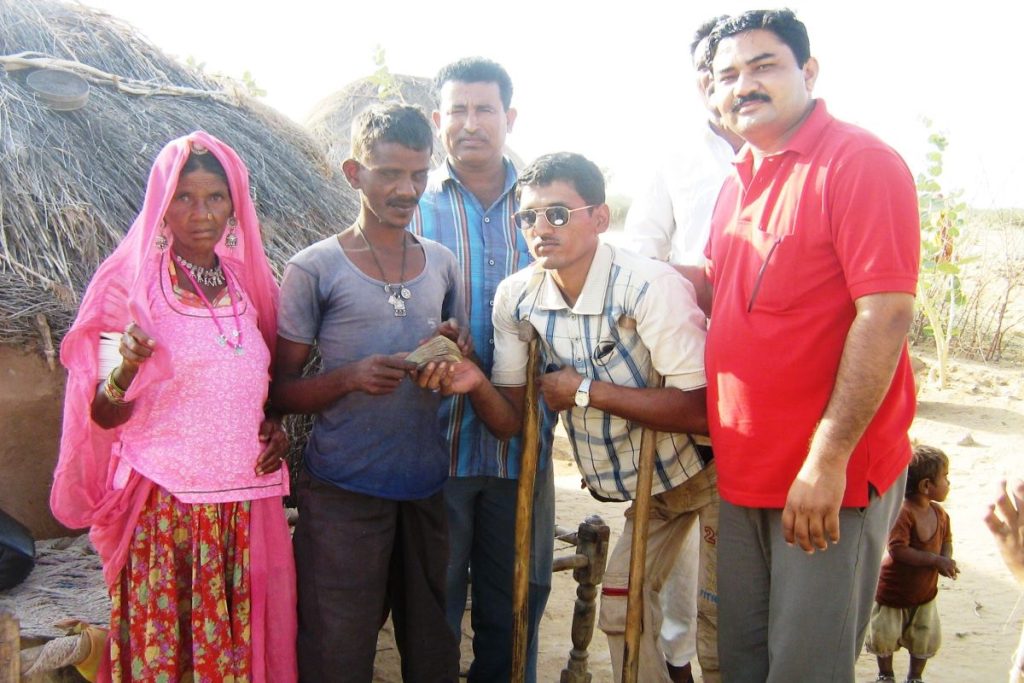
Beyond certification, MMBA assists persons with disabilities in obtaining support aids according to their needs and requirements. The organization has helped 113 persons with disabilities receive aid services including tricycles, hearing aids, canes, and other assistive devices. These aids dramatically transform daily life—a tricycle provides mobility and independence, a hearing aid enables communication and social participation, a white cane opens pathways to navigation and safety.
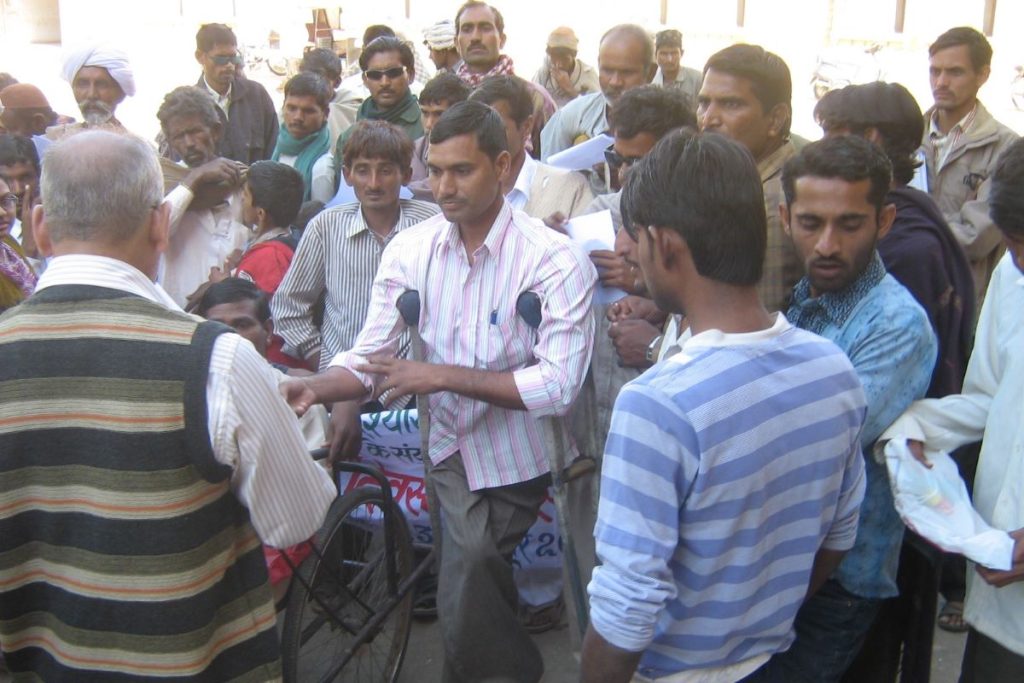
MMBA also mobilizes persons with disabilities for camps organized for aids, appliances, and certificates, ensuring that even those in the remotest villages can access these essential services. The organization maintains liaison with Health Departments, Social Welfare Department, Roadways, Railways, Banks, and District Administration to provide better supportive schemes and facilities to persons with disabilities.
Recognizing that disability inclusion requires systemic change, MMBA has organized capacity-building events to sensitize government staff in rural areas for community-based rehabilitation services. Training participants have included 105 Auxiliary Nurse Midwives, 71 Anganwadi Workers, 270 teachers, 109 Traditional Birth Attendants, 138 Community Health Volunteers, and 43 visually impaired persons and their counterparts for economic rehabilitation—totaling 736 people trained to become disability-inclusive in their professional roles.
These training sessions cover community-based rehabilitation services and roles of government stakeholders, rights of persons with disabilities, types of disabilities and their causes, prevention and curative methods to avoid disability, the Persons with Disabilities Act 1995, and the concept of Individual Rehabilitation Plans. The objective remains sensitizing various stakeholders for qualitative and quantitative services at local level. When an Anganwadi worker understands disability rights, when a teacher knows how to support a child with learning differences, when a health worker can identify preventable causes of disability—the entire ecosystem becomes more inclusive.
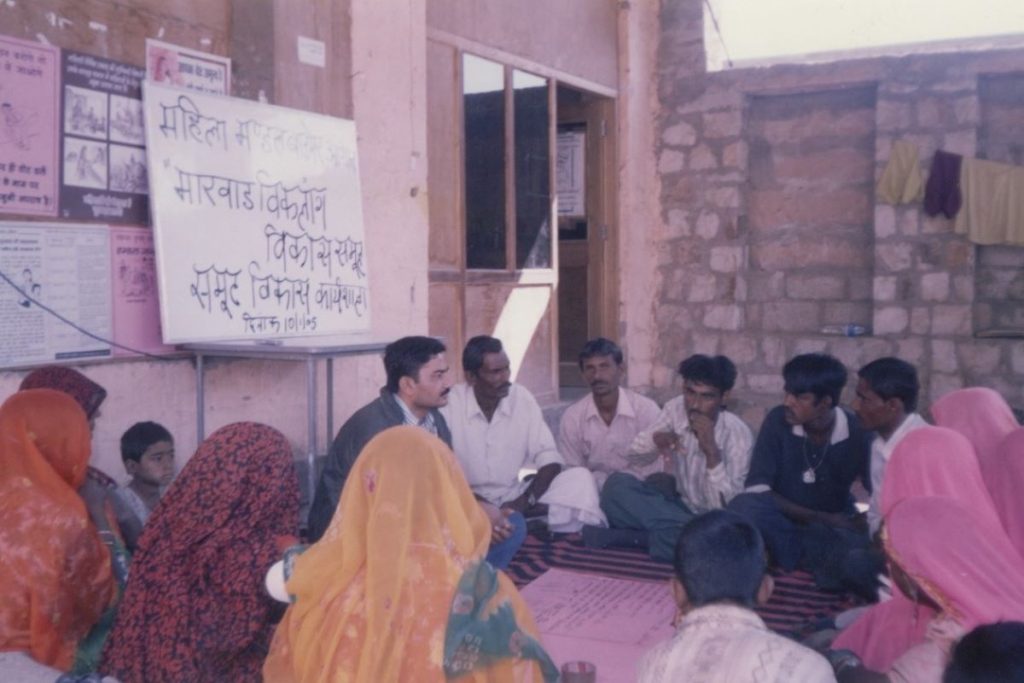
Social rehabilitation involves changing hearts and minds—the most challenging but essential aspect of inclusion. MMBA conducts community awareness meetings, develops Individual Rehabilitation Plans, and mobilizes persons with disabilities in social gathering events with community support. For mainstreaming persons with disabilities, the organization sensitizes communities toward positive approaches through on-hand support and rights-based education provided to socially active people, volunteers, and Self Help Group members.
Rallies, street plays, campaigns, and federation meetings are organized to raise awareness about disability issues. These public events challenge stereotypes, celebrate abilities, and demand rights. When communities see persons with disabilities organizing, speaking, performing, and demanding—perceptions shift. The disabled move from objects of pity to subjects of rights, from recipients of charity to claimants of justice.
Regular meetings, contacts, and counseling with family members of persons with disabilities remain crucial. Often, families need as much support as the individuals themselves—guidance on care-taking, information about available services, encouragement to allow their disabled family members to participate in education and employment, and emotional support in challenging journeys.
Education represents a fundamental right yet remains inaccessible to most children with disabilities in rural Rajasthan. MMBA has made educational rehabilitation a priority through multiple initiatives.
The Integrated Education Programme specifically targets children with visual impairment and low vision. MMBA runs five Integrated Education units with 39 visually challenged and low vision children receiving education from trained itinerant teachers. These teachers visit homes and schools, counsel families and students, identify individual needs, and provide personalized attention to every student so they can eventually join the mainstream of education.
The program ensures education within children’s local environments rather than forcing them into distant residential schools. After identification through baseline surveys, initial eye screening determines rehabilitation needs—some children require low vision aids and large print materials, others need Braille instruction. Based on recommendations from pediatric eye specialists, appropriate educational approaches are designed for each child.
Through this intervention, the organization motivated communities and families, resulting in 79 children who were deprived of education and belonged to the disabled community joining schools during one program year. This represents not just educational access but social transformation—families allowing their disabled children to attend school, schools accepting these children, communities recognizing their right to education.
MMBA engages in advocacy for policy-level changes regarding education of differently abled children. The organization raises its voice for appointment of special teachers in government schools, construction of ramps for differently abled children, and maximum facilities at schools for students with disabilities. In one powerful advocacy action, 165 differently abled children participated in a rally at Barmer headquarters, submitting a note to the District Collector demanding these essential provisions.
The organization has also facilitated scholarships for twelve visually challenged children through regular engagement with government intermediaries. After identification, eight children successfully recovered their sight after operations at Venu Hospital in New Delhi. These children have now joined with normal children and attend school regularly. Parents praised the organization’s efforts in transforming their children’s futures from darkness to light, from isolation to inclusion.
Economic empowerment remains critical for dignity and independence. MMBA has provided training on income-generating activities to 125 persons with disabilities related to vocational and technical training as per their requirements. The organization has trained 500 persons with disabilities in job roles tailored to market demands, including Domestic IT Helpdesk Attendant, Handset Repair Engineer, Sewing Machine Operator, Hand Embroiderer, Handloom Weaver, Domestic Data Entry Operator, and Dairy Farmer/Entrepreneur.
These market-relevant skills enhance ability to secure self-employment or wage-based employment. The intervention has not only improved employability but also boosted confidence and independence. Of those trained, 67 persons with disabilities started self-businesses with support from community and family members. They are now economically independent and have improved their living through community-based approaches. Twenty-three persons with disabilities trained through Self Help Groups are engaged in economic activity for better earnings for themselves and their families.
MMBA has also provided financial support to 47 persons with disabilities to promote livelihood activities, offering financial assistance ranging from ₹10,000 to ₹50,000 as per clientele requirements for different activities. This seed capital enables persons with disabilities to establish small enterprises—grocery shops, tailoring units, handicraft production, agricultural activities—transforming them from dependents to earners, from recipients to contributors.
The organization conducted a Baseline Disability Survey to identify specific needs and challenges faced by persons with disabilities. As part of efforts to enhance visibility and income generation, MMBA facilitated participation in Haat Melas held in cities like Delhi, Mysore, Mumbai, and Pune, where persons with disabilities showcased and sold handmade items. These events have helped persons with disabilities earn significant incomes while also enhancing their confidence and market recognition. Regular workshops and awareness programs help persons with disabilities understand and effectively utilize relevant government schemes for financial aid, healthcare, and other benefits.
To mainstream persons with disabilities in society, MMBA develops models for target groups through Integrated Rehabilitation Plans involving communities. The organization intends to provide platforms at district, state, regional, and national levels to strengthen voices of persons with disabilities. MMBA engages in developing networks according to needs for availing rights.
The organization facilitates development of skills for formation of Self Help Groups at village level and shapes these collectives into federations at district level, linking federations with like-minded community-based organizations at state and national levels. During various program cycles, the organization supported persons with disabilities to form five Self Help Groups, providing technical training on income-generating activities for economic rehabilitation. Additionally, five Self Help Groups specifically for persons with disabilities have been formed and supported, including groups of disabled women and men.
These collectives provide mutual support, collective bargaining power, access to credit, shared learning, and political voice. When persons with disabilities organize, they move from isolation to solidarity, from individual struggles to collective action, from requesting favors to demanding rights.
The Marwar Viklang Adhikar Manch (MVAM) has been formulated specifically for rights of persons with disabilities across Barmer, Jaisalmer, Jalore, and Jodhpur districts. Recognizing that provisions in the Disability Act 1995 remain miles away from reach of needy and poor persons with disabilities, MVAM makes consistent efforts for rights of disabled populations.
The Manch’s objectives are comprehensive and rights-based: Aware all persons with disabilities living in remote areas about their rights. Link and benefit all persons with disabilities with welfare schemes of government. Increase membership of the Manch and strengthen it. Make efforts for employment of persons with disabilities. Enroll all children with disabilities in regular schools and ensure basic and essential facilities in schools. Decrease discrimination prevalent in society. Work for proper representation of persons with disabilities in Panchayatiraj institutions at all levels. Advocate for amendments at policy level according to needs of persons with disabilities. Work through networking with media, Panchayati Raj Institutions, community-based organizations, and other organizations. Make efforts for proper and better implementation of welfare schemes of government. Work for social change at all levels.
Meetings of MVAM members are conducted once every three months. Active members from all four districts and teams working in disability field participate. Main objectives include reviewing work done in previous months and planning for upcoming periods. Main issues discussed include health facilities available in the area, traditional thoughts toward persons with disabilities in society, reaching real beneficiaries with government welfare schemes, awareness generation for prevention and control of disability, and implementation of provisions in the disability act.
Annual Sammelans (conferences) of persons with disabilities are organized at regional level every December 3rd on International Day of Persons with Disabilities. The purpose of these gatherings is to provide common platforms for persons with disabilities to share problems and prepare strategies for availing their rights to development and rehabilitation. Memorandums of demands are submitted to government for recognition of rights.
In most parts of the Thar Desert, people remain illiterate, especially women. MMBA developed Information, Education, and Communication materials on social rehabilitation of persons with disabilities and disability rights. The organization printed and distributed 10,000 posters with pictures for information dissemination on disability issues. People appreciated these posters covering messages through pictures, making information accessible even to those who cannot read. Three IEC materials have been developed on disability issues, ensuring that crucial information reaches communities in formats they can understand and use.
Systemic Change Through Persistent Effort
In general, communities have gained more information about rehabilitation services. Persons with disabilities are getting services frequently at concerned government departments. These shifts did not happen accidentally—they resulted from MMBA’s persistent advocacy, consistent service delivery, community sensitization, and empowerment of persons with disabilities themselves to claim their rights.
The journey continues. In a region where disability once meant invisibility, MMBA has made persons with disabilities visible. In communities where disability meant dependence, MMBA has enabled independence. In a society where disability meant exclusion, MMBA builds inclusion. One certificate at a time, one training at a time, one Self Help Group at a time, one rally at a time, one child in school at a time—MMBA creates a world where disability is recognized as part of human diversity, where persons with disabilities possess not just needs but rights, and where barriers crumble before the insistent demand for dignity, equality, and full participation in all aspects of life.
Success Stories of Transformation
The impact of MMBA’s disability work manifests in transformed lives. Asiyat, a person with disability, participated in state and national workshops and seminars, meeting with Mr. Pavan Surana (President of Finance Commission, Rajasthan State), Girija Vyas (President Women Commission of India, New Delhi), and many famous personalities of India. She moved to many places to interact with other people. Today Asiyat is confident and independent with several success stories of achievement. In her one and half years working, she has done numerous developmental works for her village, prioritizing women, children, and poor community issues in her Gram Panchayat. This is the first time in her village’s history that so many development works were accomplished focusing on poor community, women, children, and persons with disabilities.
This journey from marginalized individual to community leader exemplifies the transformative power of MMBA’s work. When persons with disabilities receive education, skills, economic opportunities, and platforms for participation—they do not merely survive, they lead. They do not merely benefit from development, they drive it. They do not merely ask for inclusion, they create it.