

In the vast, unforgiving expanse of the Thar Desert, where summer temperatures soar to 48 degrees Celsius and annual rainfall barely touches 277 millimeters, agriculture and animal husbandry constitute not just economic activities but acts of defiant survival.
The desert terrain of western Rajasthan creates adverse and complex challenges—scorching temperatures, recurrent droughts, unfavorable conditions for agriculture production and dairy farming, and severely limited sources of livelihood. These harsh realities force male partners to migrate for earnings, leaving families fragmented and communities struggling. Yet agriculture and animal husbandry remain the vital lifelines of the rural economy, the major sources upon which the majority of the rural population depends.
Barmer district faces these challenges with particular intensity. Ninety-five percent of the population resides in scattered, remote dhanis (hamlets) miles away from basic requirements. Agriculture here is entirely rain-fed; irrigation facilities remain virtually non-existent. Livestock also suffers badly from recurrent droughts. The major crops—millets (Bajra), Gwar, Moong, and Moth—often fail when the monsoon disappoints. In years of continuous drought, conditions turn catastrophic. The 2014-2015 drought, Barmer’s tenth consecutive year of water scarcity, saw a state government report identifying 97% of villages—1,975 out of 2,034—as drought-affected. There was no food. Cattle died at water points. Livestock populations plummeted. Poor families reduced food intake by half or skipped meals entirely. Large-scale migration of people and cattle began toward neighboring Gujarat. Hundreds of thousands of cattle and goats perished.
For the poorest families, sheep and goats represent primary income sources—they are, quite literally, “the cows of the poor.” Yet these animals receive no recognition in the government’s famine code. During droughts, fodder is distributed only for cows, not for sheep or goats. Consequently, sheep become victims of famine and perish, taking shepherd livelihoods with them. Recognizing these existential challenges, Mahila Mandal Barmer Agor has developed comprehensive, geographically relevant interventions in both agriculture and livestock sectors, promoting sustainable methods adapted to desert conditions and advocating tirelessly for policy changes that recognize the realities of poorest communities.
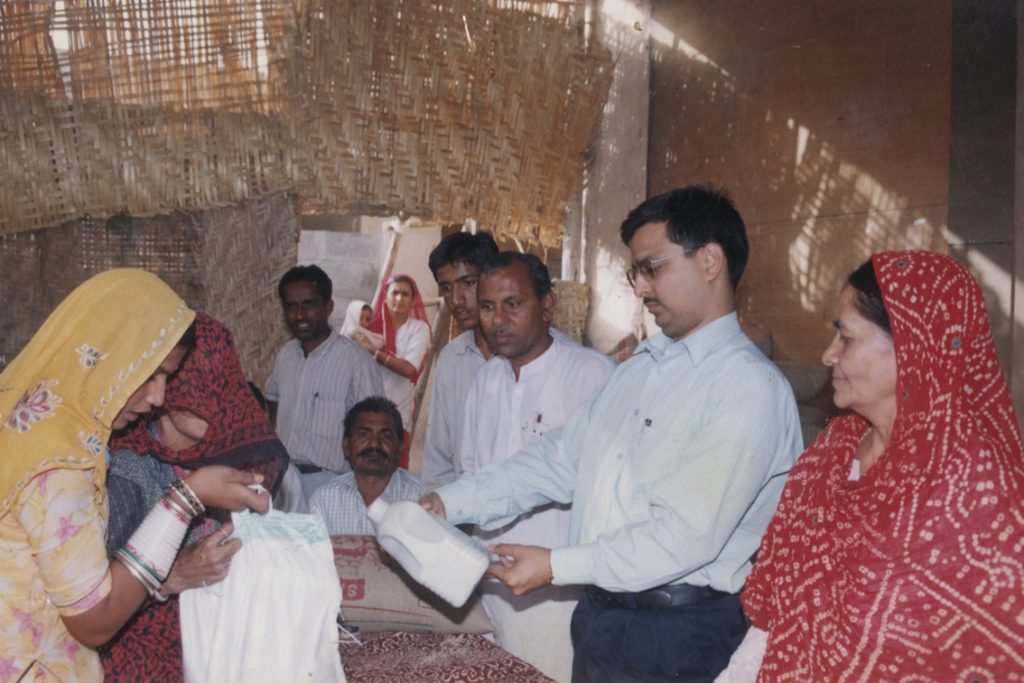
MMBA promotes dairy farming as a profitable, sustainable business model particularly suited to women’s economic empowerment in arid zones. Dairy farming offers several advantages in desert contexts: it doesn’t require large land holdings, it provides daily income rather than seasonal returns, women can manage dairy enterprises alongside household responsibilities, and it creates local employment without requiring migration.
Over recent years, MMBA has conducted systematic training programs targeting both current and aspiring dairy farmers. In the 2018-19 cycle, 30 people received training in Dairy Farmer/Entrepreneur roles. The following years saw expansion—70 people trained in 2022-23, and 120 individuals trained in 2023-24. These programs combine theoretical knowledge with practical demonstrations, ensuring participants develop real, applicable skills.
The training curriculum is comprehensive, covering every aspect of dairy business management. Participants learn production of earthworm manure (vermicomposting) and organic manure from cow dung, reducing dependence on expensive and environmentally damaging chemical fertilizers. Training emphasizes management of lactating cows and buffaloes, including proper nutrition to maximize milk yield, care during pregnancy and post-calving periods, and maintaining hygiene to prevent infections.
Animal disease control receives particular attention. Participants learn to recognize common diseases, implement preventive measures, administer basic treatments, and know when to seek veterinary intervention. Proper feeding practices are taught, including formulation of balanced diets using locally available resources, cultivation of fodder crops suited to arid conditions, preservation techniques for fodder during scarcity periods, and optimal feeding schedules for different categories of animals.
The training extends beyond animal care to business dimensions. Participants learn about animal grain and its judicious use, fodder cultivation techniques suited to low-water conditions, milk product marketing strategies including value addition through producing paneer, ghee, and curd, understanding market prices and preventing middleman exploitation, and establishing direct connections with consumers or dairy cooperatives. Infrastructure development is covered through sessions on setting up and maintaining animal sheds that protect livestock from extreme heat, designing proper ventilation systems, managing waste effectively, and creating comfortable resting spaces that improve animal health and productivity.
To ensure practical learning, MMBA conducts exposure visits for participants. In multiple program cycles, 60 participants from various villages have participated in these visits, observing successful dairy operations, interacting with established dairy farmers, understanding real-world challenges and solutions, and building confidence that dairy farming can indeed provide dignified, profitable livelihoods. These visits prove transformative—seeing peers succeed in dairy farming dispels doubts and inspires replication.
The demonstrations on vermicomposting and organic fertilizer preparation have proven particularly valuable. In a region where chemical inputs are expensive and often unavailable, learning to produce high-quality organic manure from readily available cow dung and agricultural waste provides dual benefits: reduced input costs for farmers and improved soil health over time. Participants learn the science of vermicomposting, how to maintain optimal moisture and temperature, selecting appropriate earthworm species, managing the composting process, and utilizing the finished product for both fodder cultivation and kitchen gardens.
Recognizing that food security and nutrition remain critical challenges in desert communities, MMBA has promoted kitchen garden concepts across working areas. Kitchen gardens offer multiple benefits: they provide fresh, non-hybrid, healthy vegetables at household level, reduce dependence on expensive market purchases, ensure nutrition security especially for children and lactating mothers, utilize household wastewater productively, and empower women who typically manage these gardens.
MMBA has introduced a wide range of local vegetables suitable for different agro-ecologies and home-based uses. These include Gwar gum (cluster beans), coriander, spinach, and tomatoes—crops selected for their nutritional value, climate adaptability, and multiple uses. The organization provides awareness and training about kitchen garden techniques, including seed selection and preservation, soil preparation using organic manure, water-efficient irrigation methods like drip or pitcher irrigation, companion planting to maximize space and minimize pests, and seasonal crop rotation.
Importantly, MMBA has developed food processing systems that teach women how to use vegetables when fresh and preserve them for extended periods. In a region where market access is limited and refrigeration often unavailable, these preservation techniques—sun drying, pickling, fermentation—prove invaluable. The organization establishes demonstration kitchen gardens, showing best practices before small landholders adopt them. This increases availability of vegetables which are non-hybrid and healthier than commercially available alternatives. The initiative specifically targets and encourages women households, recognizing their central role in family nutrition and their capacity to manage productive home gardens alongside other responsibilities.
MMBA’s most extensive and impactful livestock intervention has been the Sheep and Wool Improvement Scheme, implemented in Barmer and Jaisalmer districts in partnership with the Central Wool Development Board (CWDB). This comprehensive program addresses the multiple, interconnected challenges facing shepherd communities—poor sheep breeds, high mortality rates, lack of healthcare, absence of insurance, poor wool quality, exploitative middlemen, and complete neglect during droughts.
The program works with massive scale—600,000 sheep (300,000 from each district of Barmer and Jaisalmer) and 7,007 shepherds. The main activities encompass healthcare for sheep, breed improvement through distributing quality rams, insurance for both sheep and shepherds, scholarships for children of insured shepherds, wool grading and marketing support, supplementary feed distribution during droughts, financial support for sheep pen construction, capacity building trainings, and advocacy for policy changes.
Sheep health camps are conducted twice annually—the first round in March-April before the hot season, and the second in August-September after the monsoon. MMBA formulated 10 health teams to provide quality services. Each team comprises one team leader, one veterinary health officer, two livestock assistants, and one field staff from the respective area. During program years, 130 sheep health camps were organized annually, providing treatment and vaccination to 306,033 sheep in Barmer district alone.
These mobile health camps bring services directly to shepherds’ doorsteps, eliminating the impossible burden of transporting flocks to distant veterinary facilities. Qualitative medicines are made available to poor and needy shepherds who could never afford them otherwise. The camps address common diseases, administer preventive vaccinations, treat injuries, perform deworming, and provide nutritional supplements. Shepherds and villagers consistently express deep appreciation for these efforts—in a region where livestock represents family wealth and food security, veterinary care becomes a matter of survival.
Beyond medical services, awareness meetings are conducted with shepherds during health camps. These sessions generate awareness about sheep and shepherds insurance, breed improvement programs, bank loan procedures, social security schemes, and welfare programs of the government. This holistic approach ensures shepherds receive not just immediate healthcare but also information that helps them access longer-term support.
Shepherds in the area typically cannot afford quality rams for breeding. Consequently, sheep populations suffer from inbreeding, poor genetic quality, low wool production, and diminished disease resistance. MMBA’s breed improvement program distributes rams of good quality to shepherds, fundamentally transforming flock genetics and productivity.
The distribution follows a carefully designed protocol: one quality ram is provided per 100 sheep in a shepherd’s flock. All rams are first insured under United India Insurance Company by MMBA, then given to shepherds. This insurance protects both the organization’s investment and the shepherd’s livelihood—if a ram dies, replacement occurs without the shepherd bearing financial loss. Distribution programs are organized at panchayat level, conducted by Ram Distribution Committees formulated by the organization to ensure transparency and fairness. In one program year alone, 3,000 quality rams were distributed across the project area in Barmer district.
The impact of breed improvement manifests within a single generation. Improved rams produce offspring with better wool quality, higher disease resistance, improved growth rates, and enhanced overall productivity. Over program years, measurable transformation occurred: wool production increased from 400-500 grams per clip to 650-700 grams per clip—a 40-50% improvement. Wool quality improved from 35-37 micron (coarser) to 30-32 micron (finer), commanding better market prices. These improvements directly translate to enhanced shepherd incomes and improved living standards.
Insurance represents a revolutionary concept for shepherd communities. Prior to MMBA’s intervention, awareness of insurance remained virtually non-existent, and high premium costs made it inaccessible even when understood. The organization had to make enormous efforts to introduce and normalize insurance among skeptical, economically vulnerable populations.
Sheep insurance is conducted under Oriental Insurance Company Limited. The premium structure is designed for affordability: ₹19 per sheep annually. On death of an insured sheep, ₹1,200 is paid as claim amount—a sum that, while modest by urban standards, represents critical relief for shepherd families. In program years, insurance coverage expanded dramatically. From a previous status of “very rare due to lack of awareness and higher premium,” the number of sheep and shepherds with insurance increased substantially.
Shepherds insurance, conducted under Life Insurance Corporation of India, provides even more comprehensive protection. The premium is ₹80 per shepherd annually. Benefits include ₹60,000 paid on natural death, ₹150,000 on accidental death, and ₹75,000 on permanent disability—sums that prevent families from falling into destitution when the primary earner dies or becomes disabled. Additionally, there is provision for scholarships for children of insured shepherds studying in classes 9th to 12th, with a maximum of two children per family eligible. ₹100 per month per child is paid after certification from the school head master.
During program years, substantial claims were processed: 3,654 sheep claims paid out from 162,035 insured sheep, and 5 shepherd claims processed from 4,422 insured shepherds. These payouts represent real families saved from economic collapse, children able to continue education, and hope maintained despite devastating losses.
Traditionally, shepherds sold raw, ungraded wool to middlemen at exploitative prices. The middlemen would then grade the wool and sell it at much higher rates, capturing profits that should have gone to producers. MMBA’s wool grading and marketing program breaks this cycle.
Shepherds are encouraged and trained in wool grading techniques, learning to sort wool by quality, fineness, length, and cleanliness. To incentivize adoption of grading practices, each shepherd is paid ₹1 per clip per kilogram twice a year as an incentive, helping the practice become habitual. Additionally, ₹2 per clip per kilogram is paid twice yearly to support direct marketing efforts, eliminating middlemen and ensuring shepherds receive fair prices.
The process is systematically organized: graded wool is collected at panchayat level, then brought to concerned wool mandis (markets) for selling. This collective approach gives shepherds bargaining power they would never have individually. The transformation is evident: from a previous status where wool grading and marketing support were non-existent, shepherds now routinely grade their wool and access better markets, significantly improving their incomes.
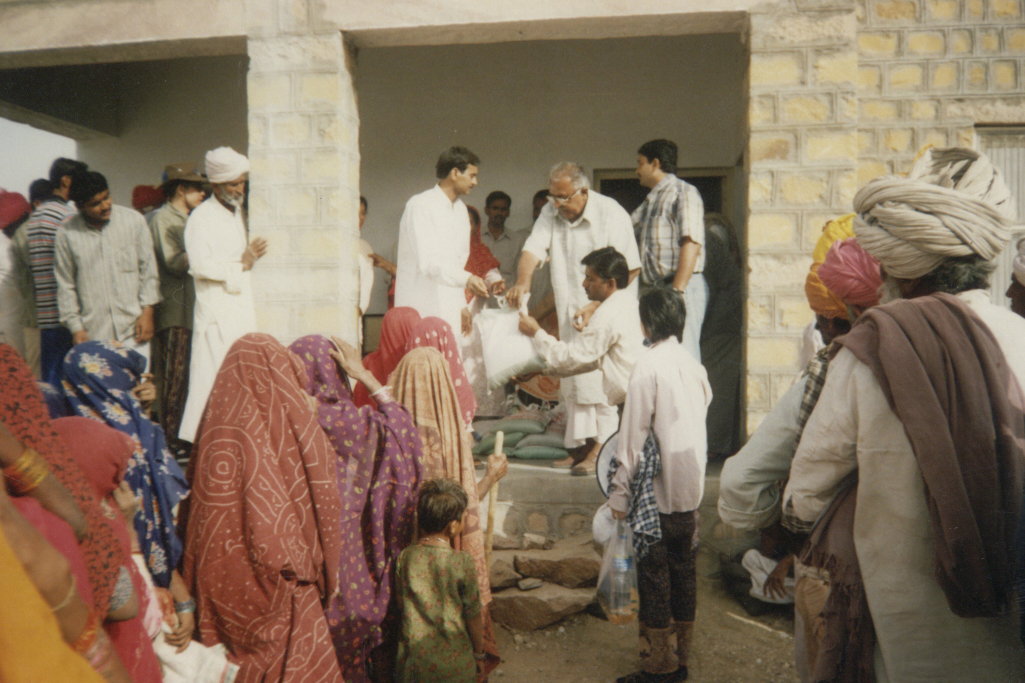
Government famine relief provides fodder for cows but ignores sheep and goats—the livestock of the poorest. MMBA recognized this grave injustice and took action. The distribution of supplementary feed was inaugurated by Mr. Ameen Khan, Panchayati Raj Minister, Government of Rajasthan, signaling high-level support for addressing this gap.
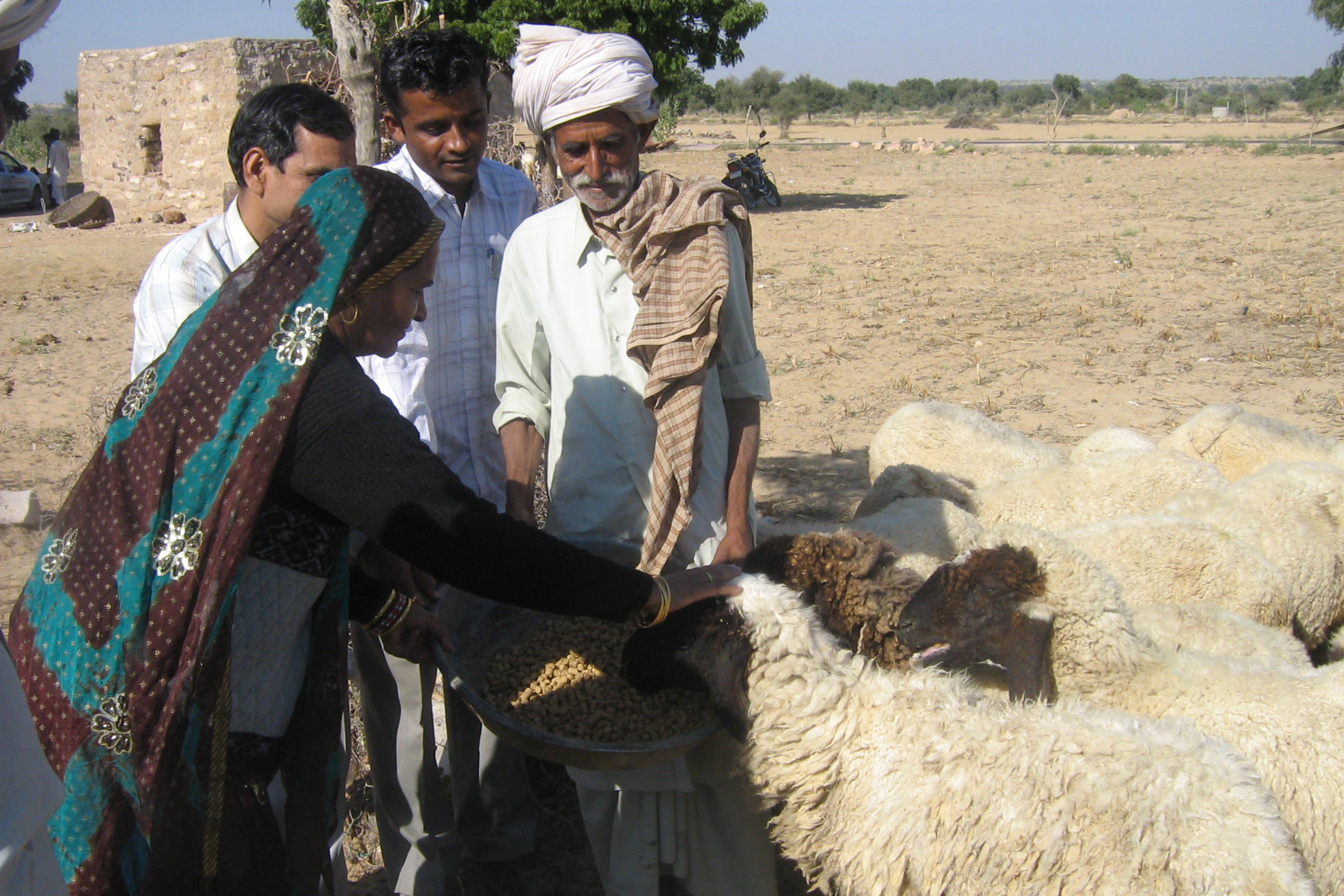
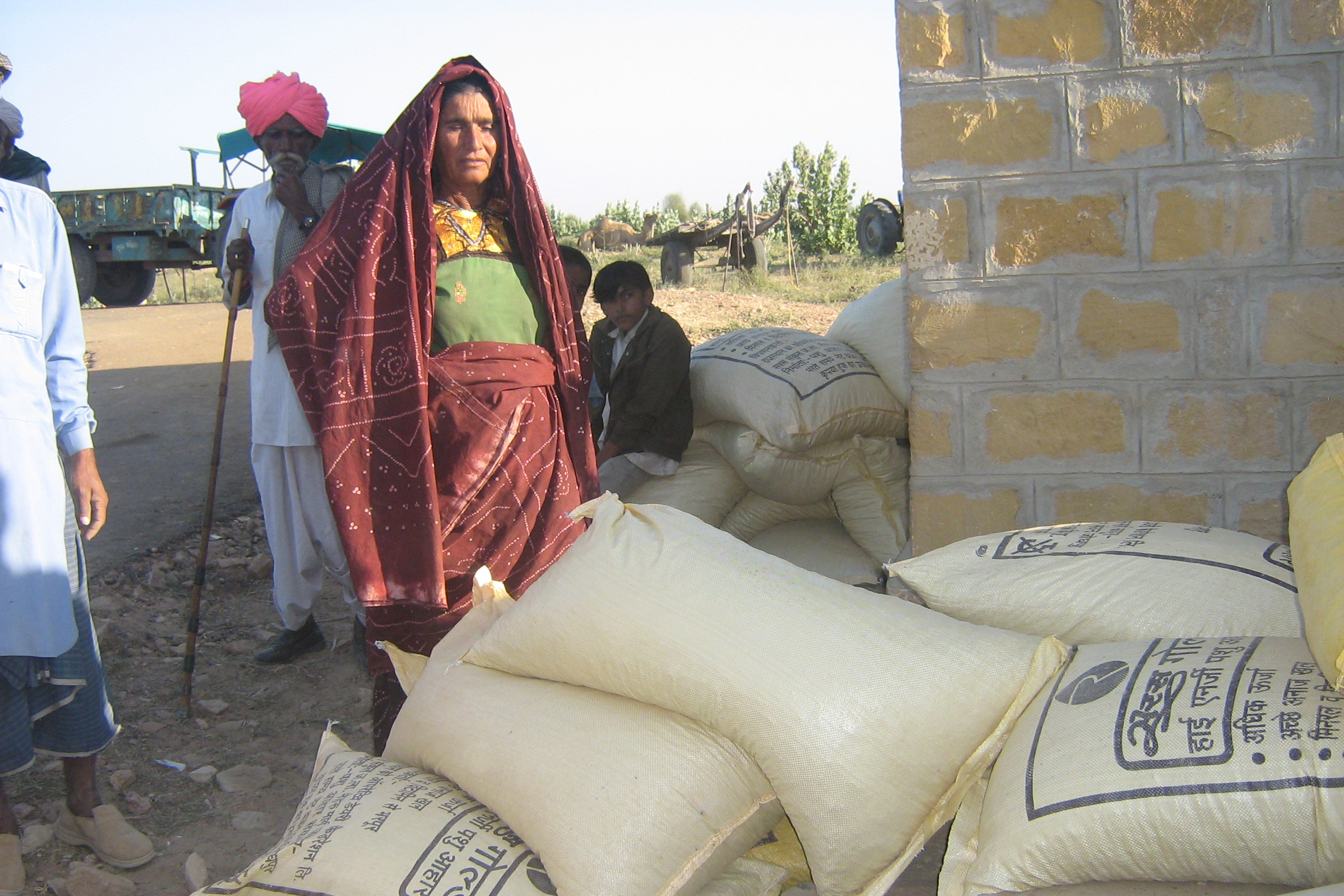
With financial support from the Central Wool Development Board, MMBA provided supplementary feed (locally called “Daala”) to 60,000 sheep from the target area. The feed was strategically provided to 25% of each shepherd’s flock—specifically weak and pregnant sheep that are most vulnerable during droughts. The quantity provided was 25 kilograms per sheep, enough to sustain animals through critical periods.
This intervention saved countless sheep lives. From a previous status where no supplementary feed was available and sheep perished during droughts, weak and pregnant sheep of poor shepherds now receive life-saving nutrition. The broader impact extends to family survival—when sheep survive, shepherd families maintain their economic base, avoiding destitution and forced migration.
Poor shepherds often cannot afford expenses for constructing quality sheep pens, leaving their flocks exposed to predators, extreme weather, and theft. MMBA, with support from CWDB, provided ₹10,000 to each selected shepherd to construct proper sheep pens. Cheques were distributed through MLA Meva Ram Jain of Barmer, adding prestige to the program. Financial support was provided to 30 shepherds on a preliminary basis, with plans for expansion.
Proper sheep pens protect flocks from:nocturnal predators like jackals and wolves, extreme heat during summer through shade structures, cold during winter nights, theft and straying, and disease transmission through better hygiene. From a previous status where no support existed for sheep pen construction, shepherds now have financial assistance to build protective infrastructure that improves flock survival and productivity.
Regular capacity-building trainings are conducted for shepherds, addressing multiple topics critical to their welfare and success. Training sessions cover sheep and shepherds insurance—explaining benefits, enrollment processes, and claim procedures; information on common diseases in sheep and their prevention; roles and responsibilities of shepherd development committees; wool grading and marketing techniques; NREGA (National Rural Employment Guarantee Act), RTI (Right to Information), and social audit processes; social security schemes they can access; and various welfare schemes of the government designed for pastoral communities.
These trainings transform shepherds from passive recipients of charity to informed, empowered citizens who understand their rights and can navigate bureaucratic systems to access entitlements.
During the catastrophic 2014-2015 drought, when government support proved inadequate and poor people were abandoning livestock on streets, MMBA took the pioneering initiative to open cattle camps. The district collector inaugurated the program by dispatching a truck of fodder, signaling official support. MMBA facilitated 40 fodder camps successfully managed with community support, serving 10,644 animals. Additionally, through advocacy and community mobilization, MMBA helped establish cattle camps in 14 more villages, serving an additional 4,500 cattle.
The impact was profound and multi-dimensional. In an area where animal husbandry constitutes the major occupation and drought had destroyed agricultural produce, people were losing their livestock—their primary capital asset. The camps provided free, good-quality fodder and nutrient-rich cattle food, helping livestock improve their health. This helped people save their livestock and maintain earning capacity for families when no other employment sources existed. Transparency meetings were organized at MMBA premises to share budgets with committee members, building trust and accountability. The organization motivated communities to form management committees, ensuring local ownership and sustainability.
Beyond service delivery, MMBA has engaged in persistent advocacy for systemic policy change. The organization initiated a campaign for inclusion of sheep and goats into the famine code, raising the issue at state level through people’s support and media engagement. When communities approached district administration for fodder, they were denied because no provision existed to provide fodder for sheep and goats. MMBA organized communities to submit memorandums to administration demanding recognition of sheep and goats as legitimate livestock deserving drought relief.
This advocacy represents the most transformative work—changing the very structures that perpetuate poverty. A shepherd federation was developed at district level, providing collective voice and organizational capacity for advocacy and mutual support. This federation seeks to improve sheep breeds, increase wool production, enhance sheep health, and ascertain sustainable livelihoods for shepherds. Through collective action, shepherds move from invisible, voiceless victims to organized, empowered citizens demanding their rights.
Institutional Support Infrastructure
MMBA runs two permanent centers ensuring program sustainability:
The Common Facility Centre (CFC) makes multiple common facilities available to shepherds. Main activities performed include wool grading with proper equipment, wool shearing using appropriate tools, scouring (cleaning) of wool, spinning operations, and processing of raw materials. The prepared materials are sent to markets for selling, ensuring shepherds receive value-addition benefits. Weavers from the area gain employment through the CFC, creating additional livelihood opportunities. The CFC represents a cooperative model where individual shepherds pool resources and access facilities they could never afford individually.
The Multipurpose Extension Centre (MPEC), established at Gagaria Station in Barmer district, provides resource services to shepherds. Information is disseminated on government schemes, sheep health and treatment protocols, wool shearing and grading techniques, and training opportunities. Shepherds can visit the MPEC any time for treatment advice, making it a permanent access point for support. The MPEC functions as a knowledge hub, bridging the information gap that previously left shepherds ignorant of available support.
Measurable Impact of Livestock Program
The transformation achieved through MMBA’s livestock interventions is documented through rigorous before-and-after comparisons across multiple indicators:
- Sheep Death Rate: Reduced from 10-12% to 3-5%—more than halving mortality and saving thousands of sheep lives annually.
- Wool Production: Increased from 400-500 grams per clip to 650-700 grams per clip—representing 40-50% improvement in productivity per animal.
- Sheep Health Facilities: From “very rare” to “regular at village level”—transforming healthcare from inaccessible to readily available.
- Breed Improvement: From “no rams of good quality” to “breed improved by good quality rams”—fundamentally upgrading genetic quality of flocks.
- Quality of Wool: Improved from 35-37 micron (coarser) to 30-32 micron (finer)—resulting in significantly better market prices.
- Sheep and Shepherds Insurance: From “very rare due to lack of awareness and higher premium” to “number of sheep and shepherds insurance has increased”—providing economic security against catastrophic losses.
- Supplementary Feed: From “none” to “weak and pregnant sheep of poor shepherds got feed 25 kg per sheep”—ensuring survival during critical drought periods.
- Sheep Pen: From “none” to “poor shepherds got financial support of ₹10,000 for sheep pen”—providing infrastructure for flock protection.
- Wool Grading and Marketing: From “none” to “wool grading is done and marketing support is provided”—eliminating middleman exploitation and increasing shepherd incomes.
These measurable improvements translate directly into enhanced food security, reduced migration, improved children’s education, better housing, and overall elevation of living standards for shepherd communities—the poorest of the poor in desert Rajasthan.
Integration with Broader Development
MMBA’s agriculture and dairy interventions don’t exist in isolation but integrate with the organization’s broader development portfolio. Kitchen gardens connect to nutrition and women’s empowerment programs. Dairy farming links with skill development and livelihood initiatives. Livestock programs interface with disaster response during droughts. Advocacy for shepherd rights connects with broader Dalit and minority empowerment work, as many shepherds belong to marginalized castes.
This integrated approach recognizes that rural poverty is multidimensional and requires comprehensive, interconnected responses. A family with a thriving dairy operation can better afford children’s education. A shepherd with healthy, insured sheep can invest in daughter’s marriage without falling into debt. A woman managing a productive kitchen garden can ensure family nutrition while generating small income through vegetable sales. These seemingly small improvements accumulate into fundamental transformations of life possibilities.
The Road Ahead
In the unforgiving desert, where nature provides little and disaster strikes often, MMBA’s agriculture and dairy interventions create oases of possibility. Through training 120 people annually in dairy farming, through saving 60,000 sheep with supplementary feed, through distributing 3,000 quality rams for breed improvement, through organizing 130 health camps treating 306,033 sheep, through processing thousands of insurance claims that save families from destitution, through advocating for policy changes that recognize the poorest—MMBA demonstrates that sustainable livelihoods are possible even in the most adverse conditions.
The vision remains clear: a future where dairy farming provides dignified income to rural women, where shepherd communities thrive with healthy, productive flocks, where kitchen gardens ensure nutrition security at every household, where droughts don’t mean livestock death and family destitution, where government policies recognize and support the poorest, and where the Thar Desert’s people don’t merely survive but prosper through agriculture and animal husbandry adapted intelligently to their environment. Every sheep saved is a family’s hope preserved. Every dairy farmer trained is a woman empowered. Every ram distributed is a flock’s future improved. MMBA walks this sandy path with persistence, expertise, and unwavering commitment to making the desert bloom with sustainable livelihoods.