
India’s roads witness daily tragedy—over 1,200 crashes, 80,000 deaths annually, and countless injuries. Vulnerable children and families face lifelong trauma, making road safety an urgent national crisis demanding immediate action.
Every day across India, roads become theaters of tragedy. One serious road accident occurs every minute. Sixteen people die on Indian roads every hour. Twelve hundred fourteen road crashes happen daily. Twenty children under fourteen lose their lives to road accidents every single day. India’s chaotic roads have officially become the most dangerous place to drive in the world—equivalent to a jumbo jet crashing every day, claiming 377 lives. In a single year, approximately 80,000 people are killed in road crashes across India, representing thirteen percent of total global road fatalities. Another 500,000 suffer serious injuries, and countless families experience trauma that lasts lifetimes—mental trauma, loss of memory, loss of limbs, permanent disabilities, and shattered futures.
In most cases, these crashes occur due to carelessness or lack of road safety awareness among road users. In today’s world, road and transport have become integral parts of every human being’s life. Everybody is a road user in one shape or another. Yet road safety education remains neglected, though it is as essential as any other basic skill of survival. Against this grim backdrop, Mahila Mandal Barmer Agor has been actively working on road safety for over fifteen years, implementing innovative awareness programs to educate communities on safe road practices and transform behavior that kills.
MMBA’s Comprehensive Road Safety Initiative
Recognizing that road safety requires sustained, multi-stakeholder engagement, MMBA has implemented one of the most comprehensive grassroots road safety awareness and education programs in western Rajasthan. For the last fifteen years, MMBA has been promoting road safety through annual road safety campaigns in partnership with district administration, police departments, Public Works Department, National Safety Council of India, and the Ministry of Road Transport and Highways.
Till recent years, MMBA had conducted Road Safety Awareness and Education Programs in 1,852 Gram Panchayats across the Jodhpur Zone, reaching unprecedented numbers through programs targeting truck and bus drivers, school children, and villagers at gram panchayat level. The organization has trained 8,444 volunteers who serve as multipliers of road safety knowledge in their communities. MMBA conducted 90 Truck/Bus Driver programs and 100 School Awareness Programs, creating a vast network of road safety consciousness across districts including Barmer, Jaisalmer, Jalore, Jodhpur, Sirohi, Pali, Bhilwara, and Ajmer.
During Road Safety Month in recent years, MMBA covered 54 villages and reached 6,521 people through intensive campaigns on road safety measures. Activities included debates, drawing competitions in schools, workshops to raise awareness among students and community members, street plays, puppet shows, rallies, film screenings, and hands-on first aid demonstrations. MMBA’s trained road safety volunteers provided first aid and assistance to accident victims, demonstrating the critical importance of immediate support in emergencies.
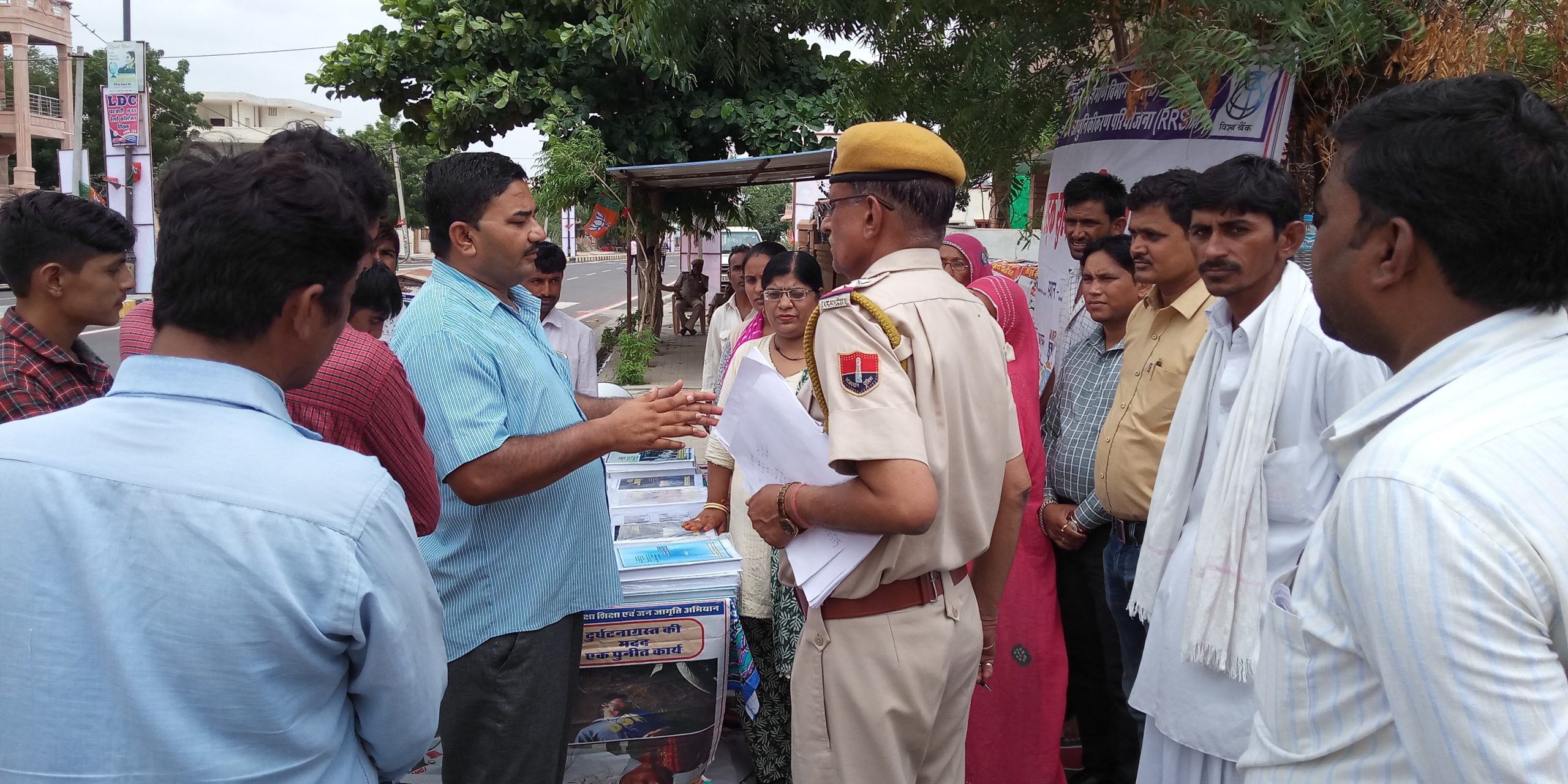
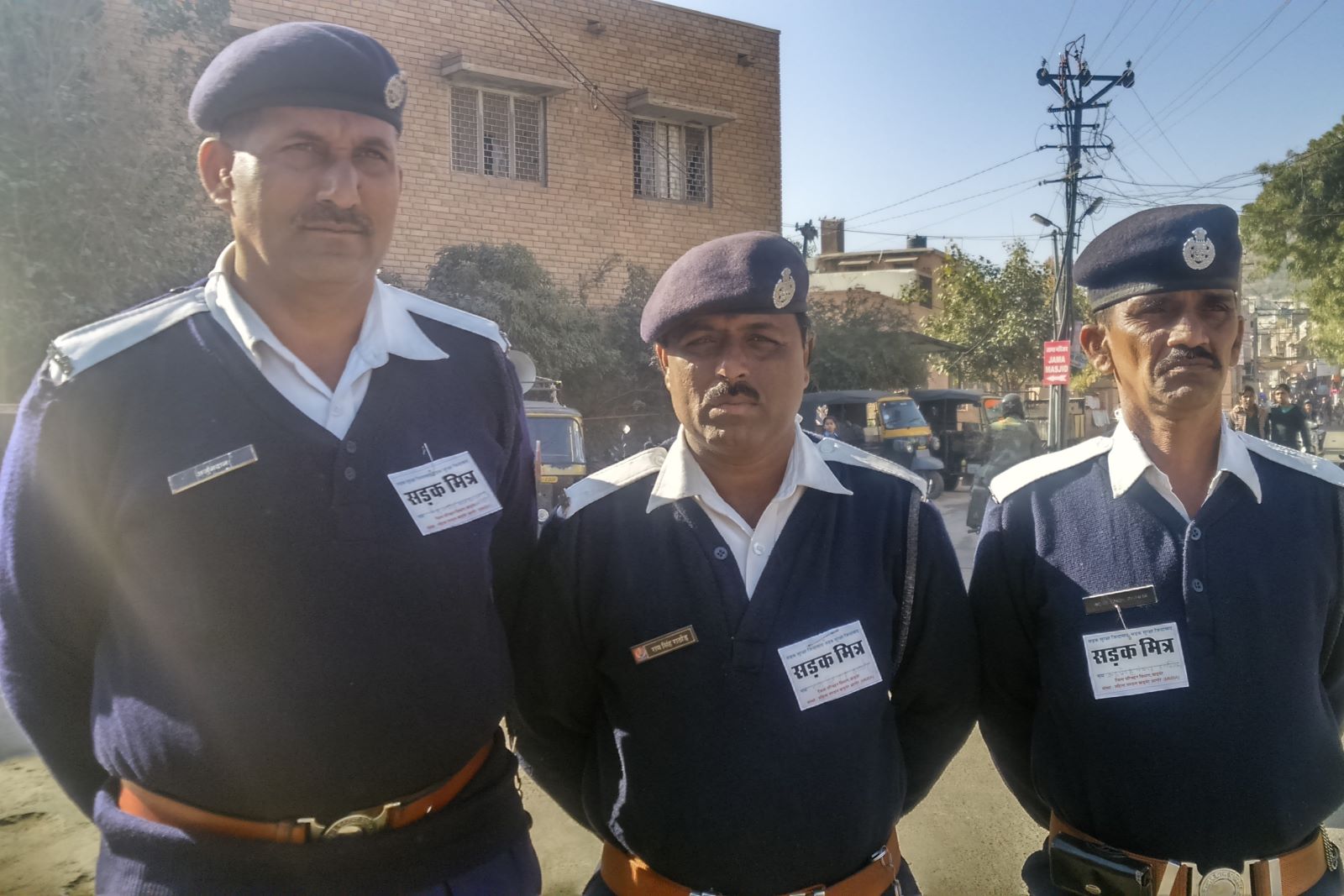
At the heart of MMBA’s road safety work stands an army of trained volunteers—8,444 individuals who have undergone intensive training and now serve as road safety ambassadors in their communities. The selection process for volunteers involves meeting with Sarpanches, Ward Panchs, and Gram Sevaks during pilot preparation and implementation periods. Volunteers are identified based on their commitment to community service, communication abilities, and willingness to dedicate time to this cause.
Volunteer training programs are conducted systematically, typically one day before panchayat-level programs. Training sessions are organized at accessible locations like Atal Sewa Kendras, running from 2:00 PM to 6:35 PM with expert trainers imparting knowledge on various road safety measurements and orienting participants about first aid and trauma management.
The training curriculum for volunteers and villagers is comprehensive and practical, covering multiple critical topics. On road safety fundamentals, volunteers learn about road safety and its importance, the rule to not let children play on roads, rules for pedestrians while using roads, proper use of helmets and seat belts, correct use of zebra crossings, the imperative to avoid mobile phones while driving, the three types of road signage (mandatory signals, warning signals, and informative signals), driving carefully when cattle are on the road, meaning of traffic lights, dangers of wrong lane driving, consequences of drunken driving, importance of driving licenses, risks of over speeding and overloading, safe overtaking practices, driving at night using low beam, use of reflective tape, penalties against breaking traffic rules and regulations, and the absolute prohibition on underage driving.
On first aid and trauma care, the training becomes even more crucial. Volunteers learn Good Samaritan practices, CPR (Cardiopulmonary Resuscitation) procedures, important emergency contact numbers, conditions where CPR should and should not be used, first-aid protocols for accident victims including CPCR process, hands-on demonstrations and practice of CPR techniques, new norms for helpers of accident victims as per Supreme Court guidelines, the critical importance of the “golden hour” (the first hour after trauma when medical intervention has the highest chance of preventing death), immediate health facilities required for victim support, introduction to vital organs, activation of emergency services, and techniques for saving lives.
The Good Samaritan training is particularly empowering. Volunteers learn that they should now be fearless about repercussions of law or being harassed by hospital staff or police. They are informed they will not be compelled to become witnesses of accidents against their wishes. This legal protection, established by Supreme Court rulings, removes a major barrier that previously prevented bystanders from helping accident victims.
MMBA partners with the National Safety Council of India, Ministry of Road Transport and Highways, and state governments to organize Road Safety Week annually, typically in January. The Ministry allocates special budgets to each state to organize diverse activities—special camps in schools, training by police and women drivers, plays on road safety, distribution of pamphlets, and various promotional activities aimed at reducing instances of over-speeding, drink driving, helmet-less driving, and non-use of seat belts.
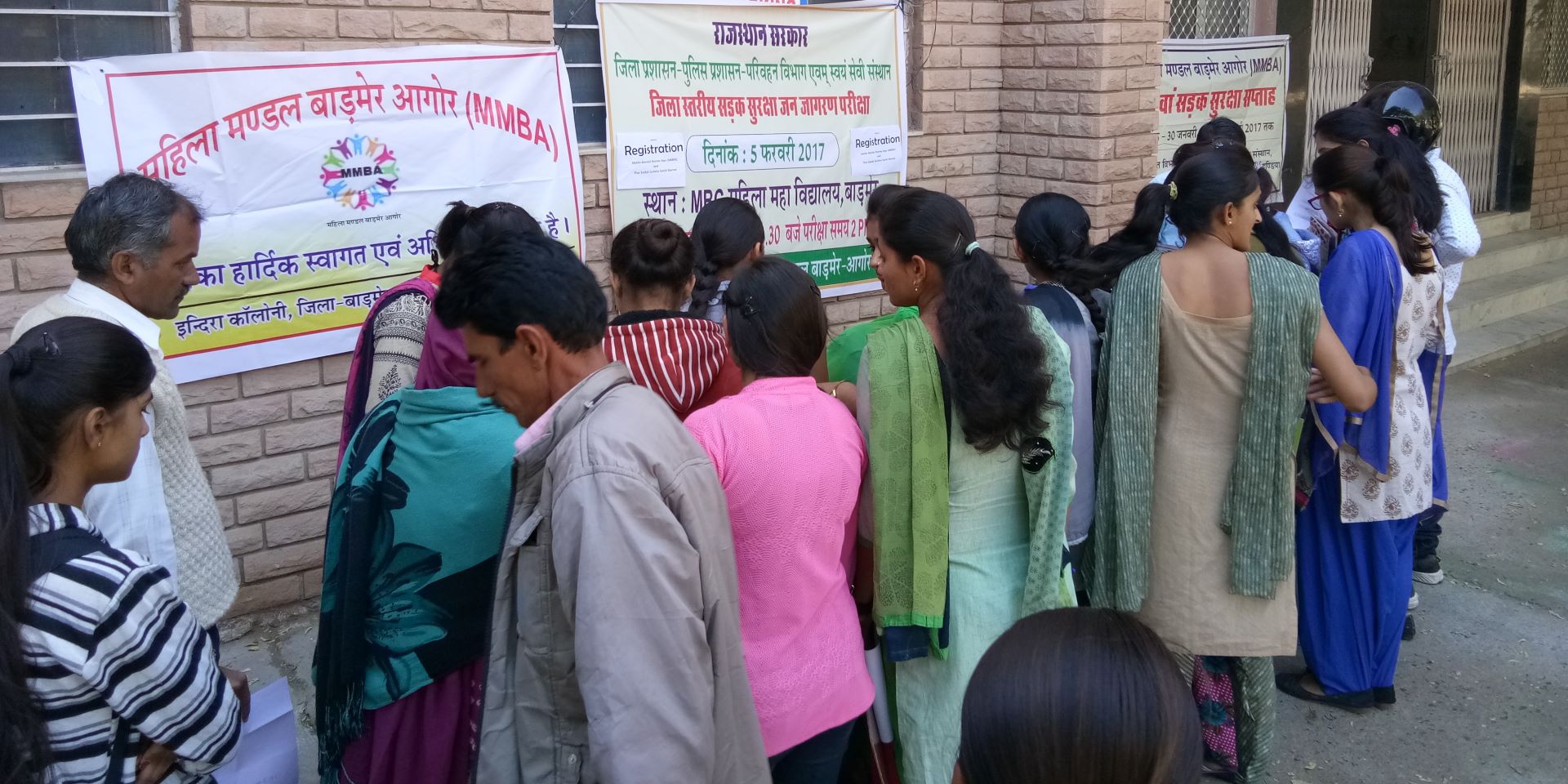
During Road Safety Week 2017 in Barmer district, celebrated from January 30 to February 6 under the theme “Your safety, secures your family—Be cautious on Roads,” MMBA implemented a meticulously planned week-long campaign. The week began with an exhibition inauguration at the Information Centre (Soochna Kendra) by the District Collector, Superintendent of Police, and District Transport Officer, with eminent personalities from traffic department, police department, corporate companies, and NGOs participating. Activities included banner displays on various circles, motorcycle rallies, and inauguration of newly constructed conference halls.
Day two featured eye checkups and first aid services at Roadways bus stand and Balaji Farm House with support from Barmer Jan Sewa Samiti and medical department, conducting 32 eye checkups for drivers. Day three saw film shows in Moti Nagar and Shiv Nagar reaching 203 women, children, and youth. Day four brought awareness generation rallies, street plays, and reference material distribution in Ramsar, Gagaria, and Gadra Road—border areas with high vehicle density where proper road safety measures are often ignored.
Day five included training programs by the transport department for 187 drivers of various vehicle categories—Bal Vahini, buses, trucks, and small vehicles—conducted periodically throughout the day. Simultaneously, road safety awareness programs were conducted in Chohtan reaching 100 participants. Day six featured an innovative road safety traffic rules examination with support from transport department, education department, and partner NGOs. An unprecedented 382 women and girls from Barmer district participated—the first such exam in India specifically targeting women and girls. The rationale was powerful: women and girls, when aware of any issue, become primary agents of social change because they represent two homes simultaneously and provide most information and knowledge to their children. Their caring nature makes them ideal ambassadors for behavioral change in road safety.
The week concluded with a grand ceremony at Town Hall featuring puppet shows, film shows and documentaries, magical shows, and distribution of prizes and certificates to participants and volunteers who excelled during the campaign.
Recognizing that professional and non-professional drivers require specialized attention, MMBA has conducted focused training programs for truck drivers, bus drivers, and other vehicle operators. Ninety Truck/Bus Driver programs have been held, reaching drivers at roadside stops, transport offices, and during special training camps. Free medical check-up camps and driving training workshops encourage drivers toward road safety practices. These sessions cover defensive driving techniques, vehicle maintenance for safety, proper rest and fatigue management, and the devastating consequences of drunken driving.
One of MMBA’s most impactful contributions has been training community members as first responders who can provide immediate assistance during the critical “golden hour” after accidents. The golden hour—the first sixty minutes after traumatic injury—represents the window when proper medical intervention has the highest likelihood of preventing death or permanent disability.
MMBA’s road safety volunteers are trained to provide first aid and assistance to accident victims, demonstrating practical techniques through hands-on practice. The training includes assessment of accident scenes for safety, calling emergency services (102 for ambulance, 108 for emergency response), checking for breathing and pulse, performing CPR when appropriate, controlling bleeding through pressure techniques, immobilizing suspected fractures, preventing shock, and safely positioning victims to protect airways.
Critically, volunteers are educated about Good Samaritan protections established by Supreme Court guidelines. They learn they will not face legal harassment, will not be compelled to give evidence unless they choose, and cannot be held liable for injuries that occur despite their best efforts to help. This legal protection removes the fear that previously caused many Indians to avoid helping accident victims, leaving them to die on roadsides.
Diverse Communication Strategies
MMBA employs multiple modes of communication to ensure road safety messages reach diverse audiences through culturally appropriate and engaging methods.
Chaupal Meetings are organized at main crossings and major places in both urban and rural areas. During these gatherings, people are told to keep left on roads at all times, be mindful of roadside lights, use helmets for security of both drivers and pillion riders, and never drive under the influence of alcohol. These meetings reach people in familiar, trusted community spaces.
Youth and Child Rallies have proven particularly effective. A total of 540 rallies were organized—90 in urban areas and 450 in rural areas. Nearly 8,100 youth and 2,700 male and female students participated. Three powerful messages were conveyed through banners and posters: “Seek safety, aim safety, follow safety, ensure safety, teach safety and yield safety,” “Drunken driving means invitation to death,” and “Wear helmet while driving.” Young people carrying these messages through streets create peer pressure for behavioral change.
Street Plays (Nukkad Natak) bring drama and entertainment to road safety education. The cultural team staged 550 street plays—90 in urban areas and 450 in rural areas—benefitting 52,250 people. These performances use humor and engaging scripts to convey serious messages. Typically, two characters debate road safety rules in funny ways—one person initially opposes all rules, but through entertaining dialogue gets convinced about the necessity of helmets, seat belts, licenses, avoiding over-speeding and overloading, not jumping red lights, and other crucial practices. Some street plays include demonstrations of CPR and first aid trauma management presented in accessible, comedic ways that help people remember.
Puppet Shows (Katputli) tap into Rajasthan’s rich tradition of puppet theater. Along with street plays, the communication team stages puppet shows where messages about road safety are given. These performances attract large crowds of women, men, and children, making road safety education a family event.
Film Screenings utilize visual media to create impact. MMBA shows carefully selected films and videos including “Phir Bhi Dil Hai Hindustani” to generate discussion about road safety issues, “Akhir Kab Tak” focusing on first aid and trauma management, “Afsos” to encourage people to help accident victims, and documentaries on road signs and traffic rules. Film shows are organized in neighborhoods like Moti Nagar and Shiv Nagar, and at border town locations like Ramsar, Gagaria, and Gadra Road, where traffic density is high. During screenings, interactive sessions allow participants to share experiences, knowledge, and case studies, with facilitators providing clarifications and additional information.
Slogan Writing creates persistent visual reminders. Slogans like “Helmet pahan kar gadi chalao, sanrakshit yatra ka laabh uthao” (Drive vehicle with helmet and enjoy safe journey), “Sharab pikar gadi chalana maut ko swayam bulana” (Drunken driving is invitation to death), and “Gadi har samay dhire chalana” (Always drive slow) are written at 707 major and public places in both urban and rural areas of target districts, creating constant reminders of safe practices.
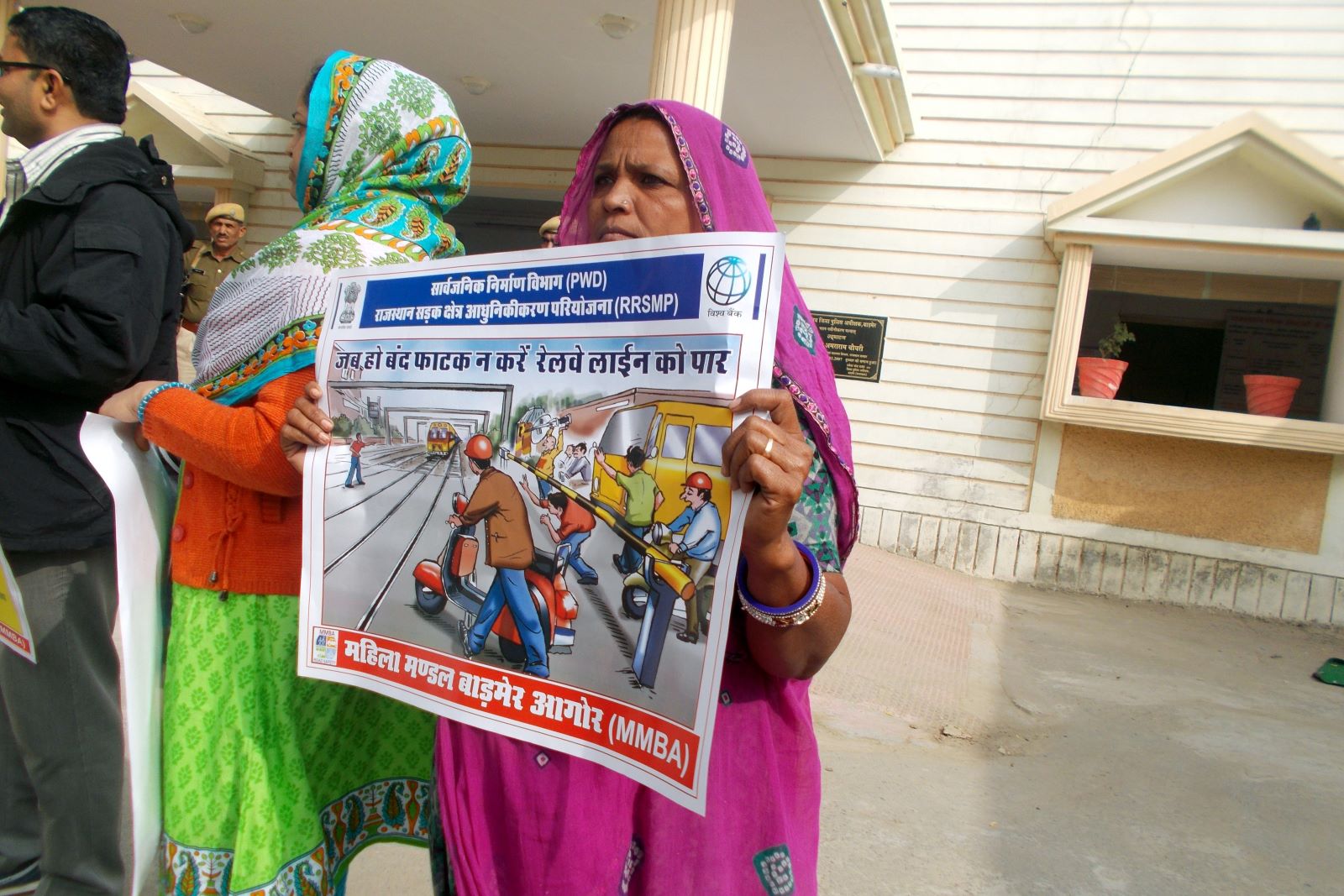
Posters and Banners carrying road safety messages are pasted at 707 urban and rural locations. Banner displays on various circles, especially during Road Safety Week, ensure that messages reach commuters at critical decision-making points.
IEC Material Distribution ensures people have reference materials. Pamphlets with detailed road safety information are distributed to the public. Training booklets, certificates, ID cards, and pamphlets are given to volunteers. Each identity card contains the volunteer’s name, district, age, address, photo, and issue date, covered in card holders with badges. Certificates are awarded to volunteers who participate properly and perform well. These tangible materials give volunteers official status and create accountability.
School Programs reach children at formative ages. Essay competitions, drawing competitions, speech competitions, debates, and quizzes on road safety engage students actively. Traffic safety games including card games, puzzles, and board games educate school children about road safety in entertaining ways. One hundred school awareness programs have been conducted, embedding road safety consciousness in the next generation.
Multi-Stakeholder Collaboration
MMBA’s road safety work succeeds because of effective collaboration with multiple stakeholders. The organization partners with government departments including Public Works Department (PWD) Rajasthan, Road Transport Office (RTO), Police Department, Transport Department, and Education Department. Collaboration with corporate partners like Cairn India provides resource support. Partnerships with like-minded NGOs such as Thar Sadak Suraksha Samiti and Barmer Jan Sewa Samiti expand reach and capacity.
Key government officials regularly participate in and support programs, including M.L. Meena (Additional Chief Engineer PWD Jodhpur), Jagdish Khatri (Additional Chief PWD Jodhpur), Traffic Officers, District Transport Officers, Traffic Inspectors, Police Officers from various stations, and teachers who facilitate school programs. This multi-stakeholder approach ensures sustainability and scalability of efforts.
Recognition and Awards
MMBA’s relentless commitment to road safety has earned recognition from both district and state levels. The organization has received awards from district administration for impactful road safety initiatives. The State Transport Department has honored MMBA for its continuous contribution to road safety awareness and education. These recognitions validate the effectiveness of MMBA’s approach and motivate continued excellence.
Impact and Outcomes
While road safety work requires long-term commitment before systemic behavioral change manifests in reduced accident statistics, MMBA’s efforts have created measurable impact. Over 6,500 people reached directly during recent Road Safety Month campaigns. Over 8,400 trained volunteers serving as multipliers in communities. Over 1,850 gram panchayats covered with awareness programs. Over 52,000 people witnessing street plays and puppet shows. Hundreds of drivers trained in safe practices. Thousands of school children educated about road safety.
Beyond numbers, the impact appears in changed behaviors: more helmet usage visible on roads, increased awareness about drunken driving dangers, children educating their parents about traffic rules, communities responding more effectively to accidents, volunteers providing first aid at accident scenes, and gradual cultural shift toward viewing road safety as a shared responsibility rather than merely a traffic police concern.
The Road Ahead
MMBA continues promoting road safety education to reduce accidents and injuries, ensuring safer roads and responsible road use in communities served. The organization understands that awareness campaigns cannot be one-off programs—they succeed only when messages are continually reinforced so they remain at the forefront of people’s thinking regarding road user behavior.
Future plans include expanding the volunteer network further into remote villages, intensifying driver training programs, establishing permanent road safety resource centers, developing more vernacular IEC materials, creating road safety curriculum for schools, using social media and digital platforms for wider reach, and strengthening data collection systems to measure impact more precisely.
The vision remains clear: a future where every road user in western Rajasthan understands that their safety secures their family, where helmets and seat belts become automatic habits rather than forced compliance, where drunken driving becomes socially unacceptable, where communities respond effectively to accidents, where the golden hour saves lives, and where roads cease being India’s most dangerous places and instead become pathways connecting people safely to their destinations, their livelihoods, and their futures. Every life saved is a family preserved. Every accident prevented is a tragedy averted. Every person trained is a multiplier of safety. MMBA walks this road with patience, persistence, and unwavering commitment to making western Rajasthan’s roads safe for all.