
In the Thar Desert of western Rajasthan, where harsh geography mirrors the hardships faced by women, Mahila Mandal Barmer Agor has spent over three decades dismantling the barriers that confine women to lives of silence and submission.
Since 1991, we have understood a fundamental truth: gender equality is not only a fundamental human right but a necessary foundation for a peaceful, prosperous, and sustainable world. Women’s empowerment at MMBA is defined as promoting women’s sense of self-worth, their ability to determine their own choices, and their right to influence social change for themselves and others.
The realities of rural life for women in western Rajasthan remain difficult to comprehend. While urban India participates in the information revolution, most women in remote villages of Barmer district live realities that have barely changed across generations. A majority of villages lack sustainable economies, and women bear the double burden of economic deprivation and social oppression through rigid caste hierarchies and patriarchal traditions. Women are generally not perceived to have meaningful income generation capacity and are relegated to household duties and undervalued labor. Without the power to work, earn, and claim rights, their voices remain silenced. Even in matters of reproduction and childbearing, women often cannot oppose the wishes of male family members.
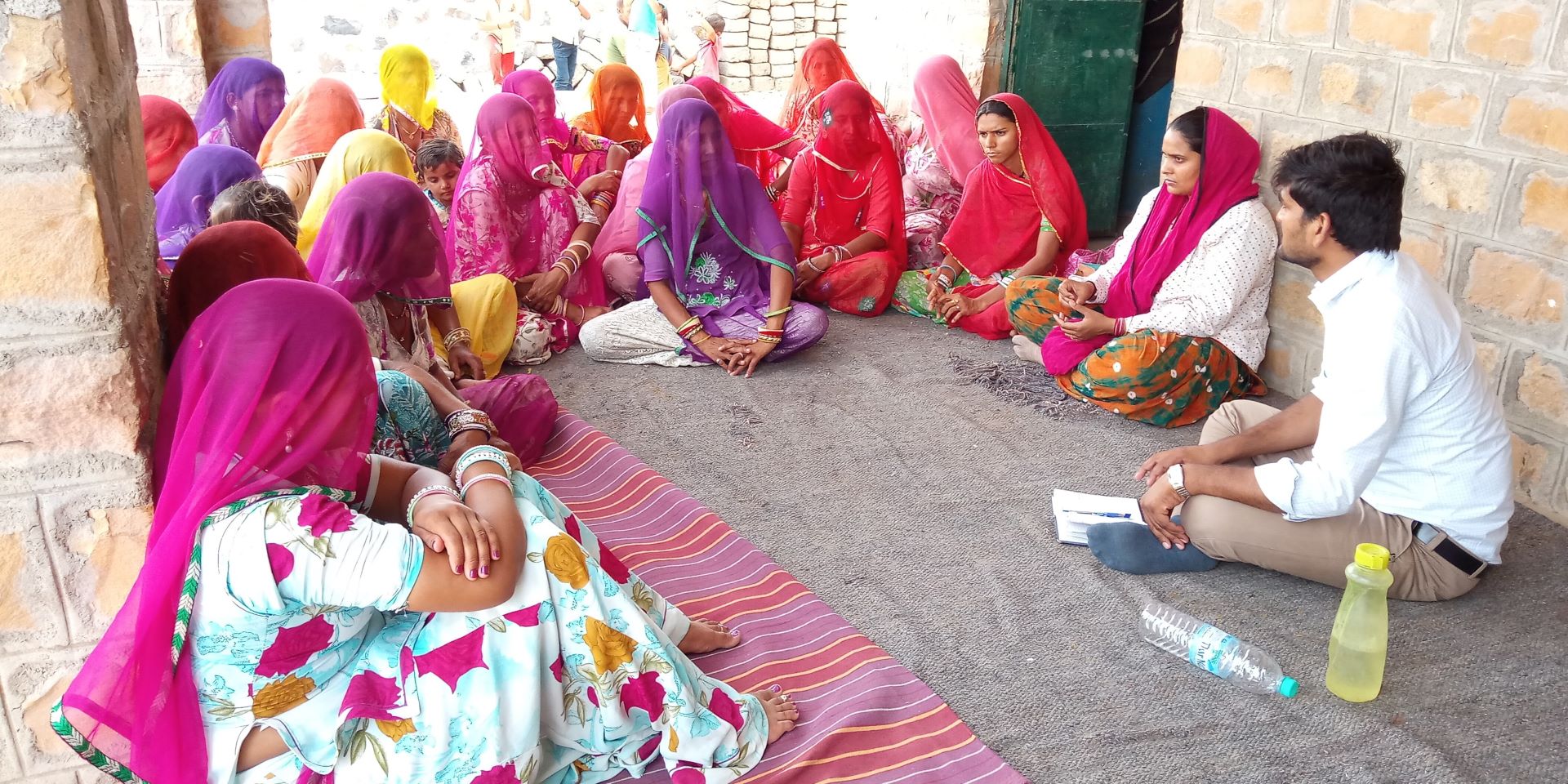
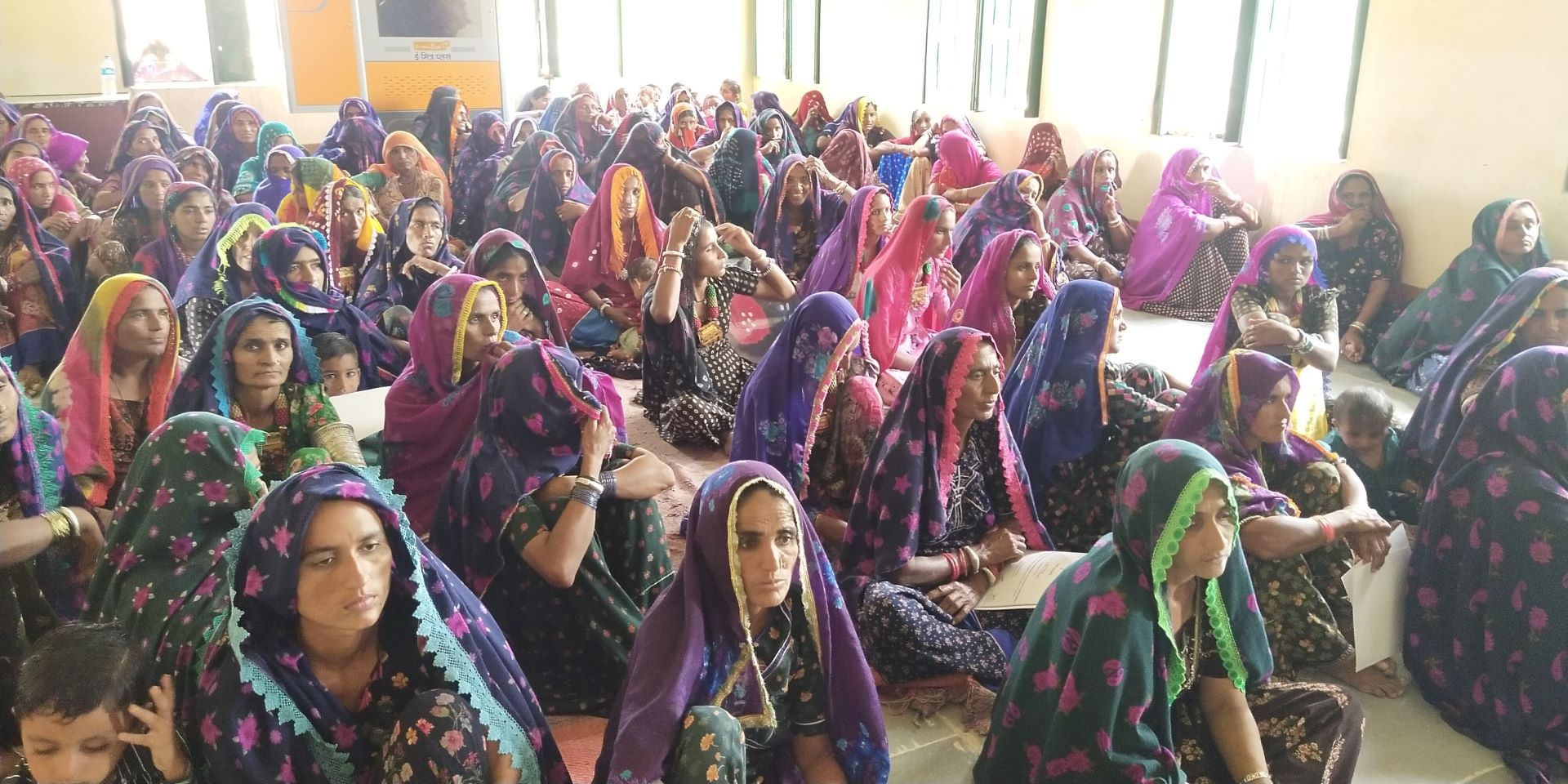
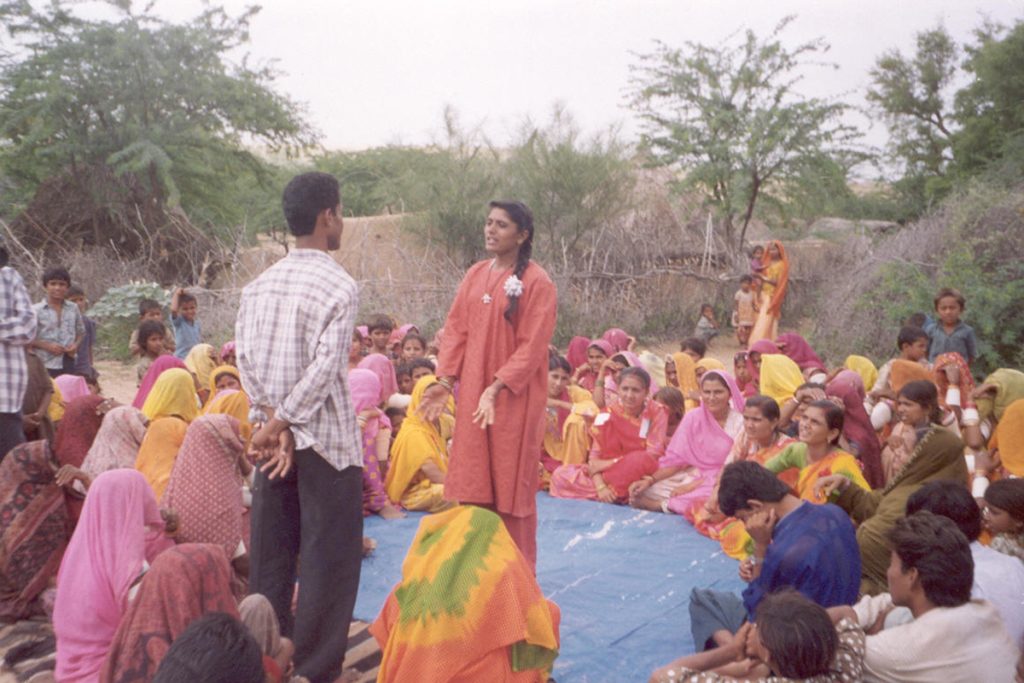
At MMBA, we follow a process through which disempowered and powerless people can change their circumstances and begin to have control over their lives. This transformation results in a change in the balance of power, in living conditions, and in relationships. Women empowerment, for us, means equal status, opportunity, and freedom to develop oneself. We equip women to be economically independent, self-reliant, and possess positive self-esteem that enables them to face any difficult situation. The empowered woman can participate in decision-making processes. For this, we conduct workshops for necessary training and capacity building, targeting political, social, and economic empowerment simultaneously.
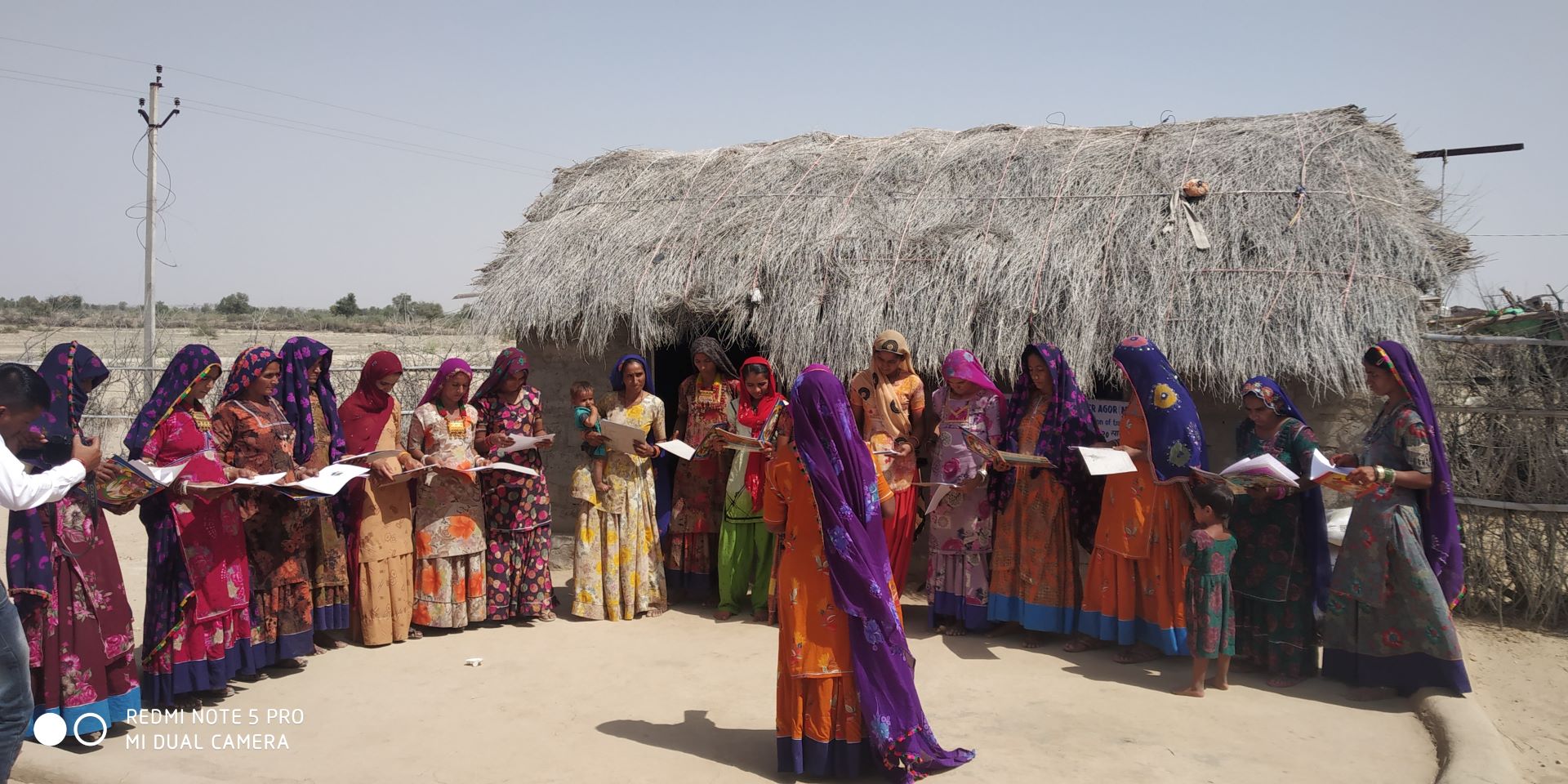
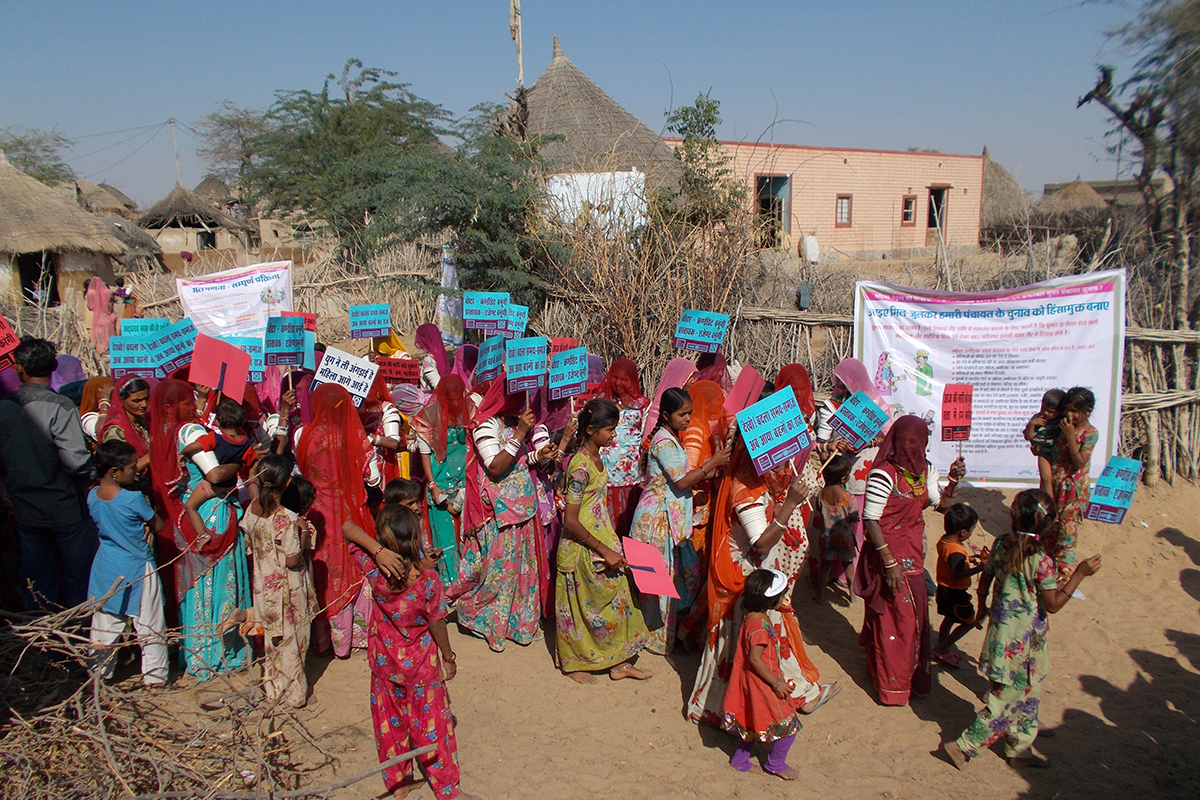
Self Help Groups constitute the cornerstone of MMBA’s women empowerment strategy. Over the years, the organization has formulated 391 Self Help Groups with 4,276 members, of which 3,495 are women. These groups transcend mere financial inclusion—they become spaces where women find voice, solidarity, and collective strength. Women who were once isolated in their individual struggles now meet regularly, share experiences, conduct savings and credit activities, and support each other through life’s challenges.
The financial impact alone tells a powerful story. Through these SHGs, women have accessed loans totaling lakhs of rupees for diverse income-generation activities: embroidery and patchwork generating ₹7,20,000 in loans for 250 borrowers, grocery shops at village level with ₹1,50,000 for 115 borrowers, goat rearing with ₹4,30,000 for 78 borrowers, cow rearing with ₹60,000 for 11 borrowers, blanket business with ₹1,85,000 for 140 borrowers, tailoring with ₹1,80,000 for 85 borrowers, handicraft work with ₹2,50,000 for 145 borrowers, carpentry work with ₹2,10,500 for 58 borrowers, fancy shops with ₹2,50,000 for 10 borrowers, and flour mills with ₹80,000 for 48 borrowers.
Beyond these numbers lies transformation. Women who once depended entirely on male earnings now contribute substantially to household income. They make decisions about expenditure, children’s education, and family planning. One exemplary case is the Self Help Group formed under leadership of Salimat Ben in Kapoordi village, Baytu block of Barmer district. With total savings of ₹80,000, this group runs micro-credit activities successfully among members and for villagers, providing loans for health, education, livelihood, cattle fodder, and other needs. The group has several success stories of women who transformed from borrowers to entrepreneurs.The organization currently facilitates 353 Self Help Groups engaged in saving and credit activities, including five groups specifically for persons with disabilities. Another 50 groups are in the formation process. Recent years have seen total savings of ₹23,50,790 with total loan disbursement of ₹17,30,000. Ninety-five women SHG members have started their own small businesses for better family earnings, all belonging to poor, deprived, and marginalized communities. Recognizing this impact, Jaipur Thar Grameen Bank awarded Ansi Devi for her contribution to women development through micro-credit schemes.
Beyond financial activities, these SHGs actively participate in raising voices on social issues related to women’s atrocities, rights, water, health, education, and representation in local self-governance. They provide support to poor village women through loans and personal assistance. Women also unite into different Sangathans and Manch (forums) to enhance their strength and increase participation in village development activities.
Recognizing that political power is crucial for systemic change, MMBA has consistently strengthened elected women representatives from gram panchayats across Barmer and surrounding districts. Despite reservations ensuring women’s representation in Panchayati Raj institutions, elected women representatives face severe restrictions in effectively exercising leadership. This becomes especially acute for Dalit women members who face double oppression. Instances are common where Dalit women Sarpanchs (village heads) sit on the floor during local governance meetings—a visible marker of caste discrimination even within spaces meant to be democratic.
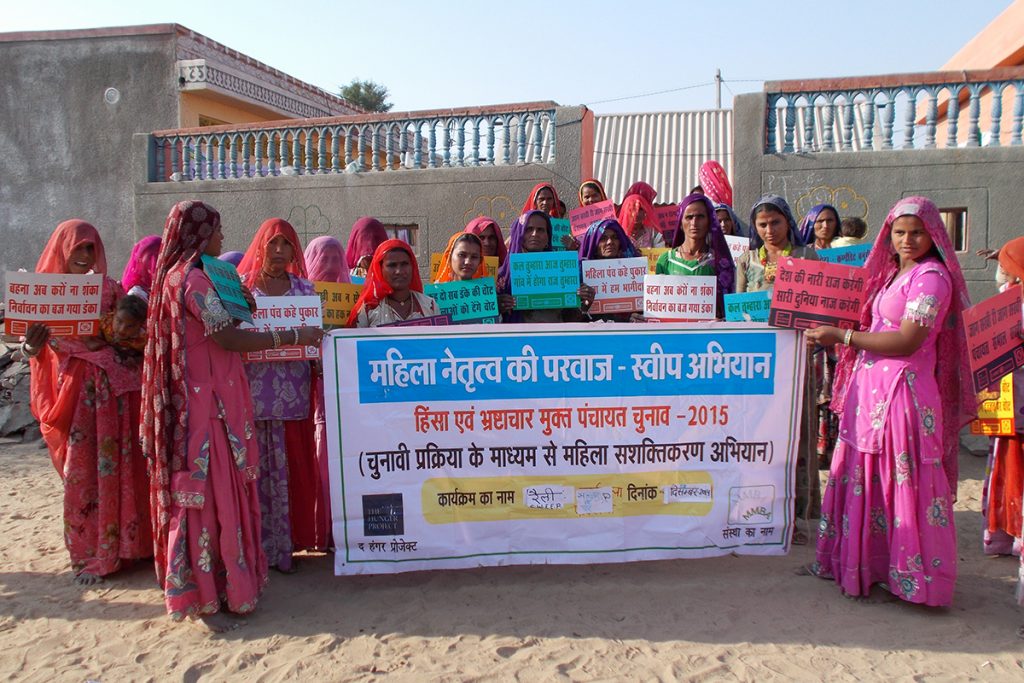
Through MMBA’s interventions, 32 women sarpanchs and 419 women ward panchs from 50 gram panchayats of Barmer block have been strengthened through capacity-building trainings and workshops focusing on roles and responsibilities, rights, communication skills, and women leadership development. A block-level sangthan of elected women representatives has been formed to make the Panchayati Raj system popular and function as an ideal democratic system. This sangthan actively advocates on village-level problems and issues, raising them at block and district levels.
The organization has conducted eight Women Leadership Workshops, three needs-based trainings, and four follow-up workshops during various program cycles. Additionally, 190 women Panchayat representatives have been trained for leadership building, and 140 women participated in follow-up workshops. To build support structures for women representatives, 140 SHG members and 50 volunteers received training.
Main activities performed include participation in fortnightly Panchayat meetings, meetings of elected women representatives, advocacy on different issues, running of Panchayat Resource Centres providing information on Panchayati Raj and welfare schemes to deprived and marginalized sections, communication workshops, and active participation in Gram Sabha and Ward Sabha meetings. MMBA supports women representatives in conducting and participating in meetings, facilitating their effective role.
The impacts are visible and measurable: Sangthan of women Panch/Sarpanch has strengthened significantly. Participation of women, Dalits, and other backward classes has increased in Gram Sabhas. Eligible and rightful beneficiaries now receive employment under NREGA. More widows, persons with disabilities, elderly people, and BPL families benefit from government social security schemes. Understanding of people toward Panchayatiraj institutions has increased substantially. Awareness among elected women representatives in the area has grown markedly. Through micro-level planning, villagers now observe genuine requirements for development with priority focus on women and poor communities, leading to increased participation in Panchayat activities and functioning, particularly from Dalit communities and women raising voices for their rights.
A path-breaking example is Amanat Ben, who was elected as Pradhan of Barmer block through MMBA’s pre-election voter awareness campaign. She has shown remarkable presence at block level as an effective leader, demonstrating what becomes possible when women receive systematic support.
The Seekho Aur Kamao (Learn and Earn) scheme from the Ministry of Minority Affairs has enabled MMBA to train 250 minority youth in two critical trades: Domestic Data Entry Operator and Fashion Designer. This 400-beneficiary program targets economic empowerment through market-aligned skills, ensuring that disadvantaged minority youth find pathways to dignified employment and entrepreneurship. The fashion designer trade, in particular, connects traditional craftsmanship with contemporary design sensibilities, preparing youth to compete in urban markets.
Understanding that literacy is power, MMBA created the Pathshala initiative—interactive village-level classrooms equipped with learning tools that bring education to women’s doorsteps. Through this program, 160 women from 10 villages receive education in community-relevant subjects. The learning and practice at Pathshala empower women on issues directly affecting their daily lives. These informal education spaces become sites where transformation begins—women learn to read, understand government documents, calculate expenses, and articulate their needs with confidence.
Under the Nari Roshni program supported by the Ministry of Minority Affairs, MMBA conducted non-residential training for 225 minority women in Nagaur district to impart and exercise leadership skills. The program recognizes that empowerment of women is not only essential for equity but constitutes a critical element in the fight for poverty reduction, economic growth, and strengthening of civil society. Women and children are always the worst sufferers in poverty-stricken families and need support. Empowering women, especially mothers, is even more important because it is in homes that she nourishes, nurtures, and molds the character of her offspring.
The efforts embolden minority women to move out of the confines of their homes and communities and assume leadership roles. They assert their rights, collectively or individually, in accessing services, facilities, skills, and opportunities besides claiming their due share of development benefits from the government for improving their lives and living conditions.
MMBA actively supports the government’s Beti Bachao Beti Padhao (Save the Daughter, Educate the Daughter) campaign aimed at addressing the declining child sex ratio and empowering girl children through education and awareness. The organization conducted extensive awareness programs across Barmer, Jalore, Sirohi, and Bikaner, engaging local communities to highlight the importance of educating and valuing girls.
Activities included Nukkad Nataks (street plays) and puppet shows designed to educate communities about the societal benefits of empowering girls and the consequences of gender inequality. Through these interactive performances, MMBA emphasized the need for equal opportunities in education, healthcare, and decision-making for girls. The organization also organized International Girls Day celebrations in October and November, where over 522 girls and women participated in debates, drawing competitions, and motivational sessions. Speakers shared inspirational stories of female leaders and raised awareness about government schemes supporting girls’ education and empowerment. Participants shared personal challenges and discussed solutions during these sessions.
MMBA makes consistent efforts to strengthen women by providing platforms to enhance their knowledge of rights through meetings and events. On March 8th each year, the organization celebrates “Swashakti Diwas” (Women’s Day) at MMBA premises. Mr. Anil Vyas, Vice-Chairperson of the Social Welfare Department, has participated in these celebrations. During events, women present their success stories of struggle and motivate other women toward empowerment. Officials share various social welfare schemes for women, encouraging them to take advantage and spread information to others. Speakers praise women’s efforts and wish them bright futures while focusing on girl child education as a tool for development of women and their families.
Women fortnight is observed to generate awareness about International Women’s Day, women’s rights, and women’s participation in decision-making and development activities at village and higher levels through symposiums and workshops. The members of Marwar Jagruk Mahila Manch—a district-level federation with 126 active women members formed through linkages of Self Help Groups—conduct rallies at district level in Barmer, Jaisalmer, Jalore, and Jodhpur to raise voices against women’s atrocities and for women’s rights.
The ratio of women’s atrocities in western Rajasthan remains among the highest in India. Women become victims of different types of violence: rape, sexual harassment, dowry-related abuse, forced sex work, mismatched marriages, and female infanticide. Though laws and acts exist against women’s atrocities and violence, they are rarely implemented at ground level. The number of women violence cases increases year by year.
MMBA has made efforts for over two decades to address women’s violence and atrocities. The organization provides free counseling and legal aid services to needy women and girls who approach for help. Staff attorneys provide citizens with free legal advice in consultations held at two public drop-in centers at office premises. Case studies are prepared for individual cases before handling them. Advocacy plans and strategies are prepared through local sangthans, and cases are brought to concerned departments, district collectors, and superintendents of police for further proceedings and necessary actions. When required, rallies and dharnas are organized with victim women and their relatives at district level.
The numbers reflect both the scale of the problem and MMBA’s commitment: the organization addressed 363 cases of women violence in one year, with 251 cases in another cycle. Most disputes are settled through Caste Panchayats and MMBA initiatives, though serious cases are registered in police stations with support from media and district administration. During one program cycle, specific case types addressed included rape (53 cases, 44 solved, 9 under process), sexual harassment (14 cases, 11 solved, 3 under process), domestic violence (171 cases addressed), dowry (8 cases, 5 solved, 3 under process), forced sex work (9 cases, 9 solved), and female infanticide (2 cases addressed).
Systemic Change Through Women’s Empowerment
MMBA’s women empowerment work recognizes that attacking women’s issues through a frontal approach alone is insufficient. The social injustice underlying the perennial problem requires comprehensive effort where communities develop through sustainable and integrated programs influencing everyone. Development of women involves many interconnected things: economic opportunity, social equality, and personal rights. The organization has successfully leveraged government schemes and programs and women protection policies into other project interventions, creating a holistic ecosystem of support.
The transformation is visible across western Rajasthan. Women who once sat silently in corners of rooms now chair meetings. Women who depended entirely on male relatives for survival now run businesses. Women who accepted violence as fate now approach legal centers for justice. Women who couldn’t write their names now maintain detailed financial records of Self Help Groups. Women who were invisible in village governance now question officials and demand accountability.
This is not merely social change—it is revolution in slow motion, carried forward by thousands of women finding voice, claiming space, and asserting dignity. Each trained woman becomes a teacher for others. Each economically independent woman changes her family’s trajectory. Each woman who speaks in a Gram Sabha shifts the culture of an entire village. MMBA’s three decades of consistent, patient, comprehensive women empowerment work have created ripples that now reach the furthest corners of the Thar Desert, transforming not just individual lives but the very fabric of communities toward greater justice, equality, and possibility.